Parks & Greenway

Myrtle Edwards and Centennial Parks
Before
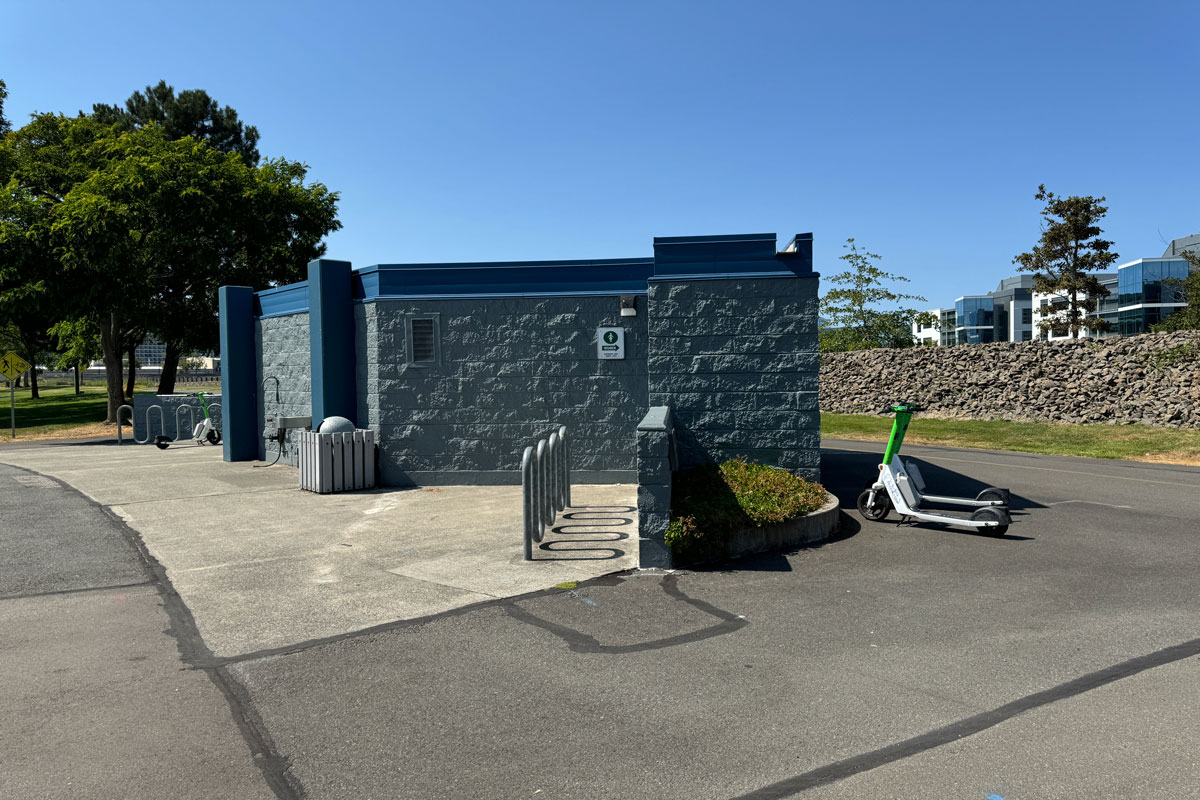
After
Before
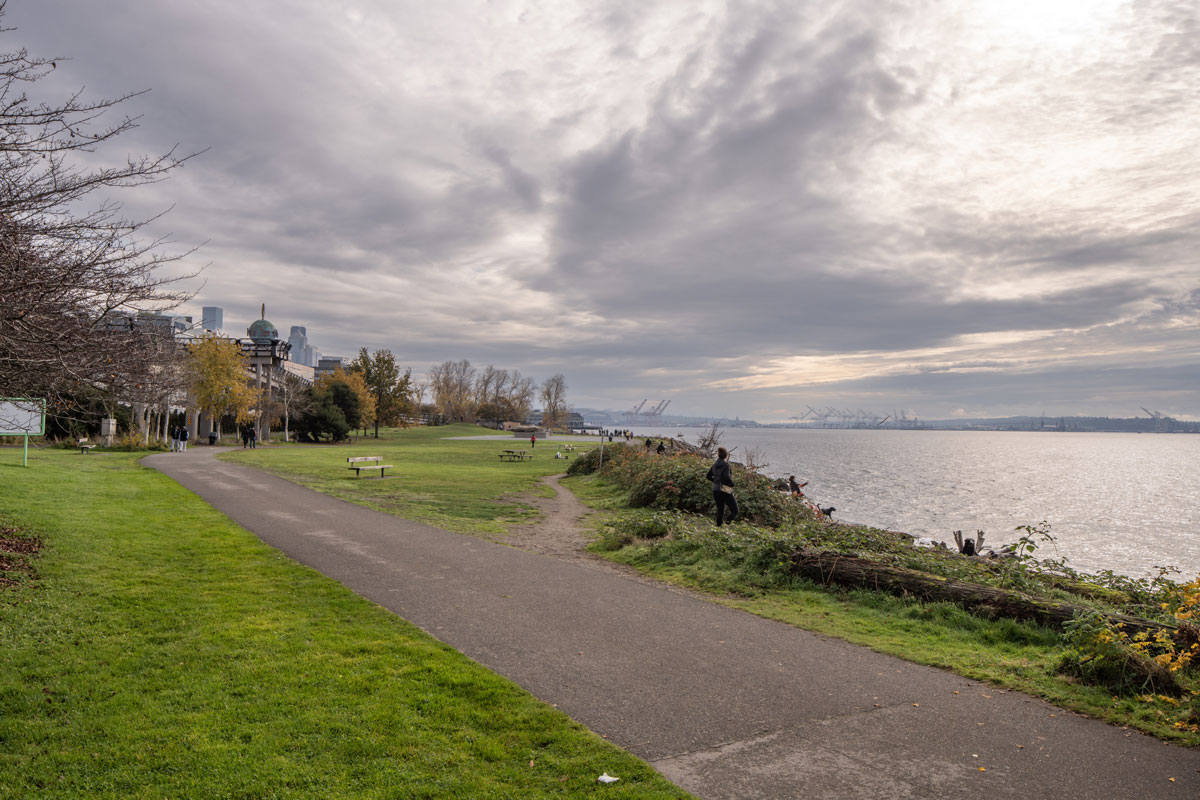
After
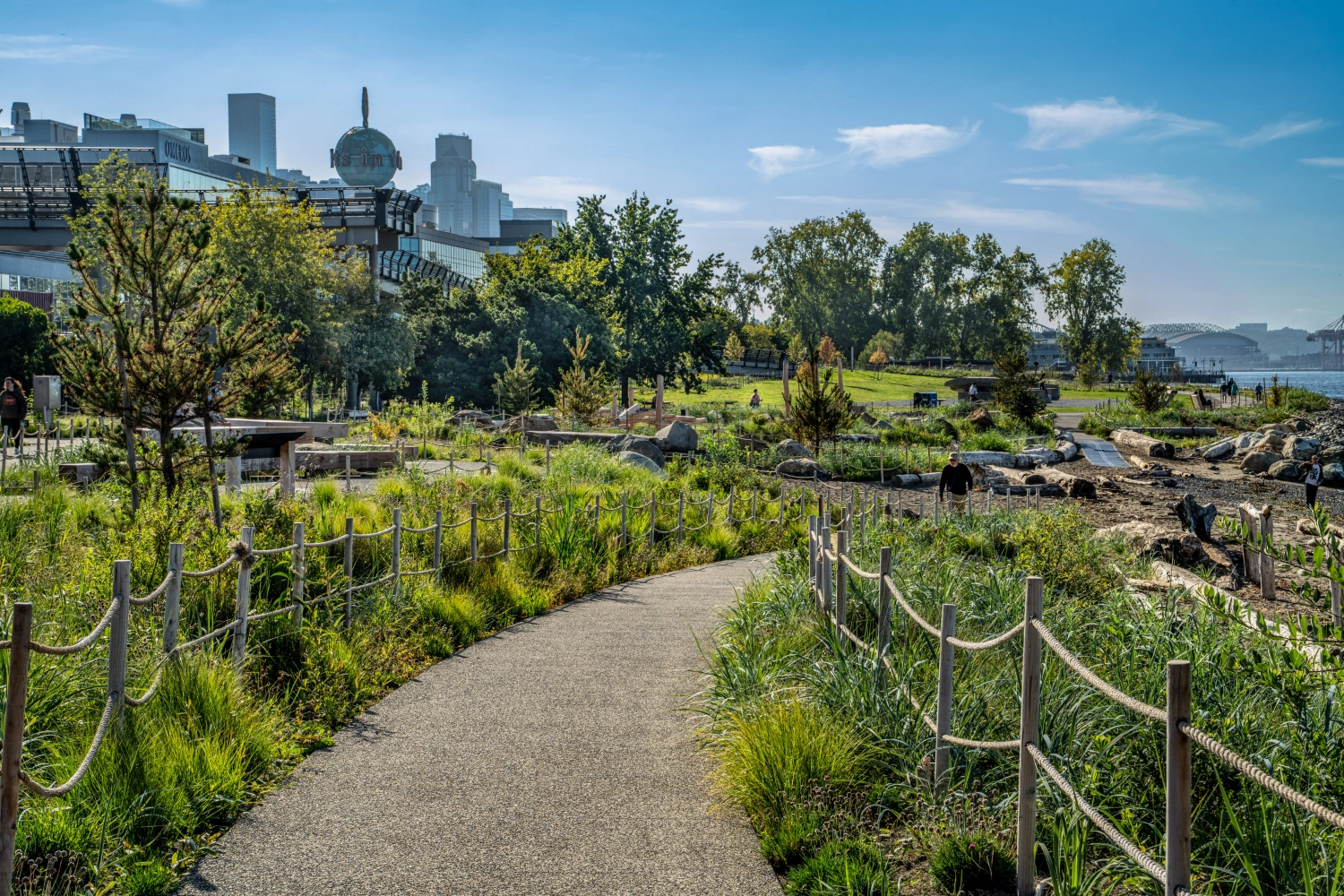
Before
After
Before
After
Before
After
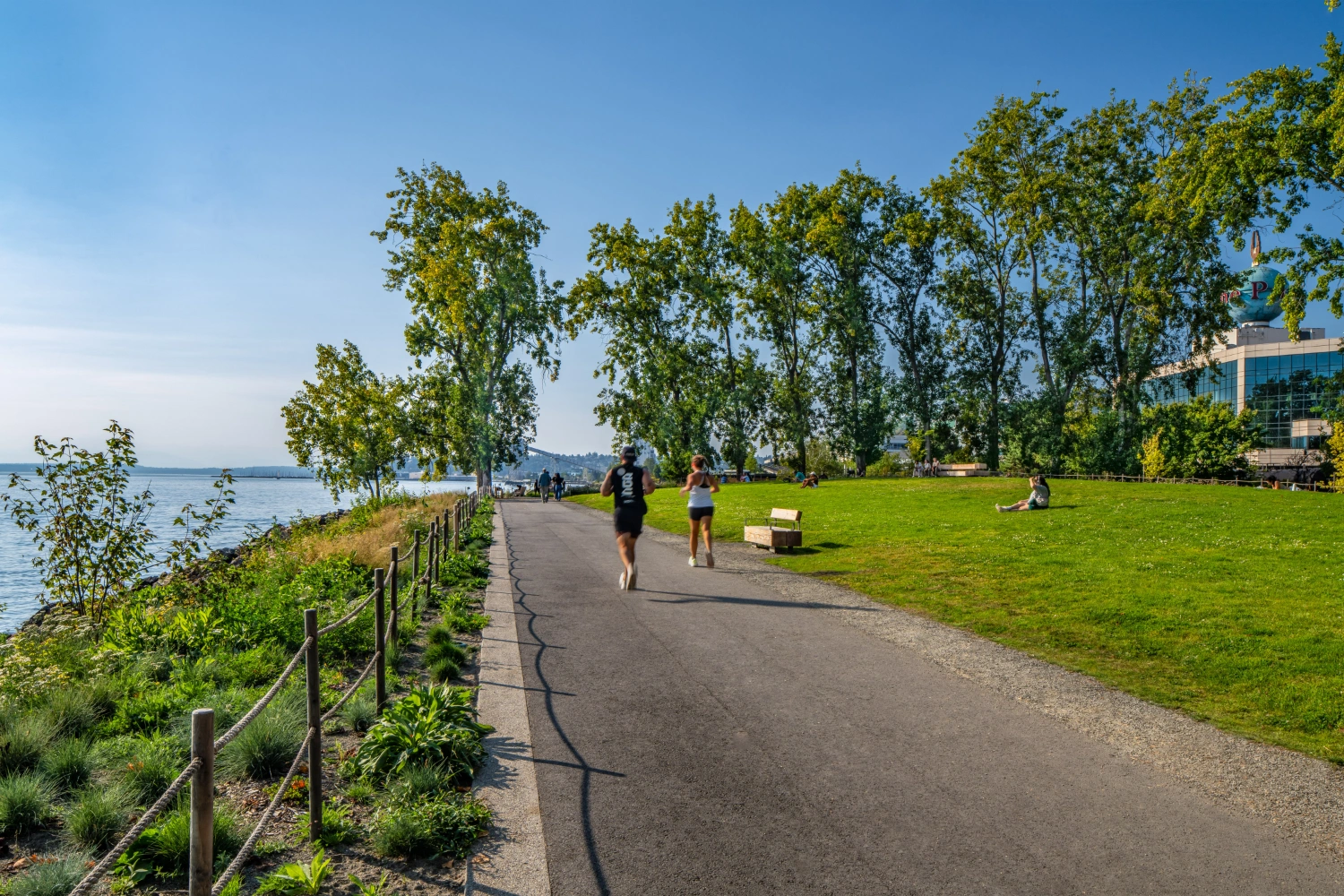
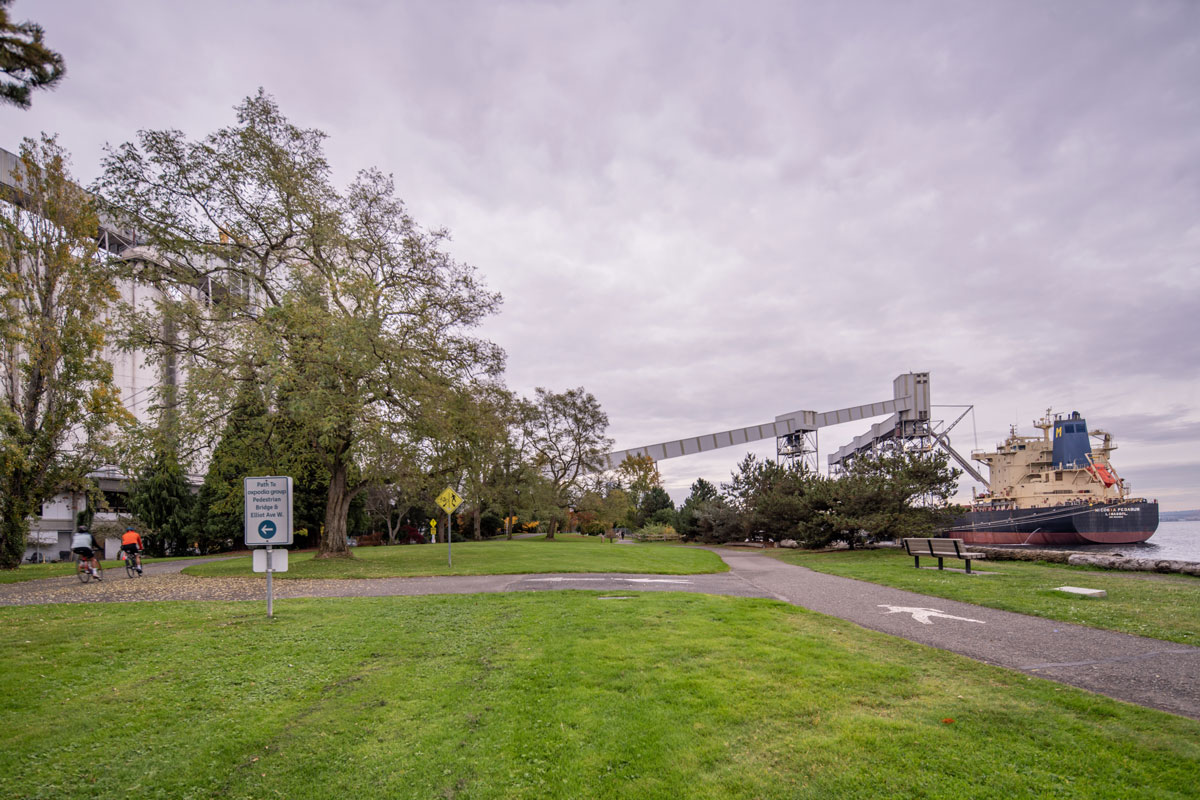
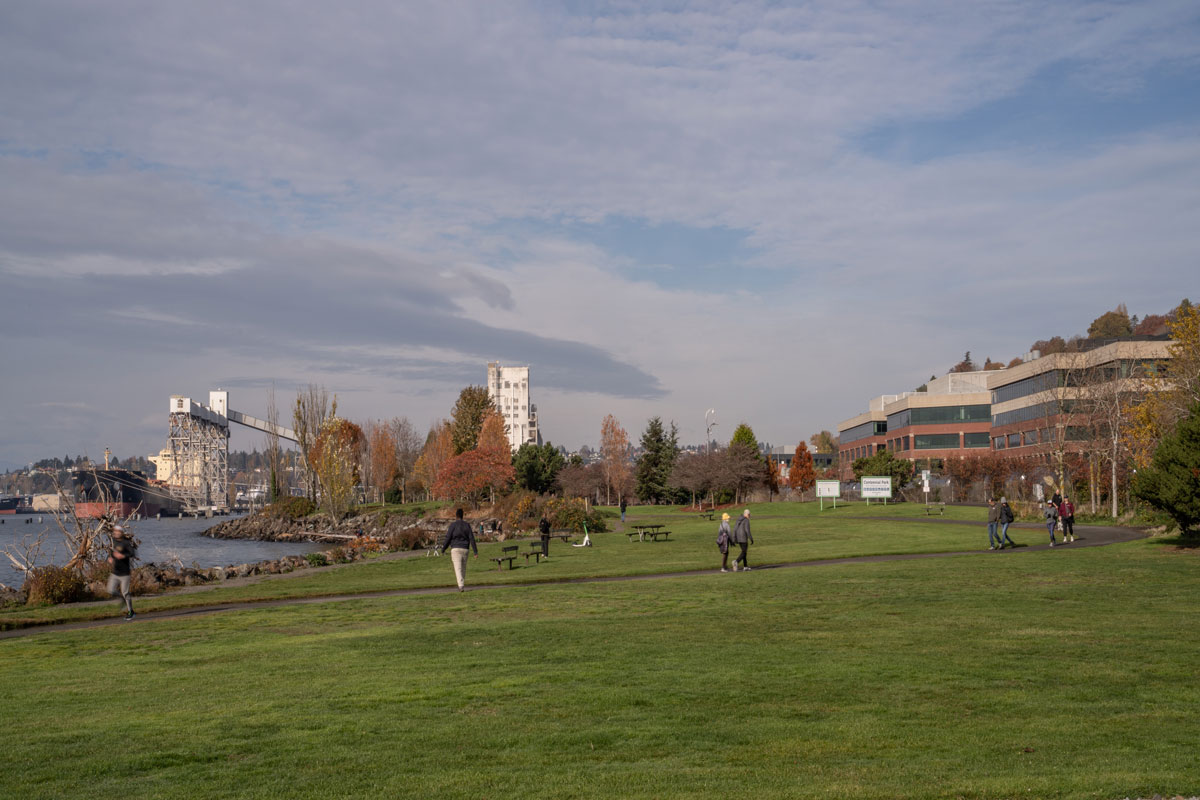
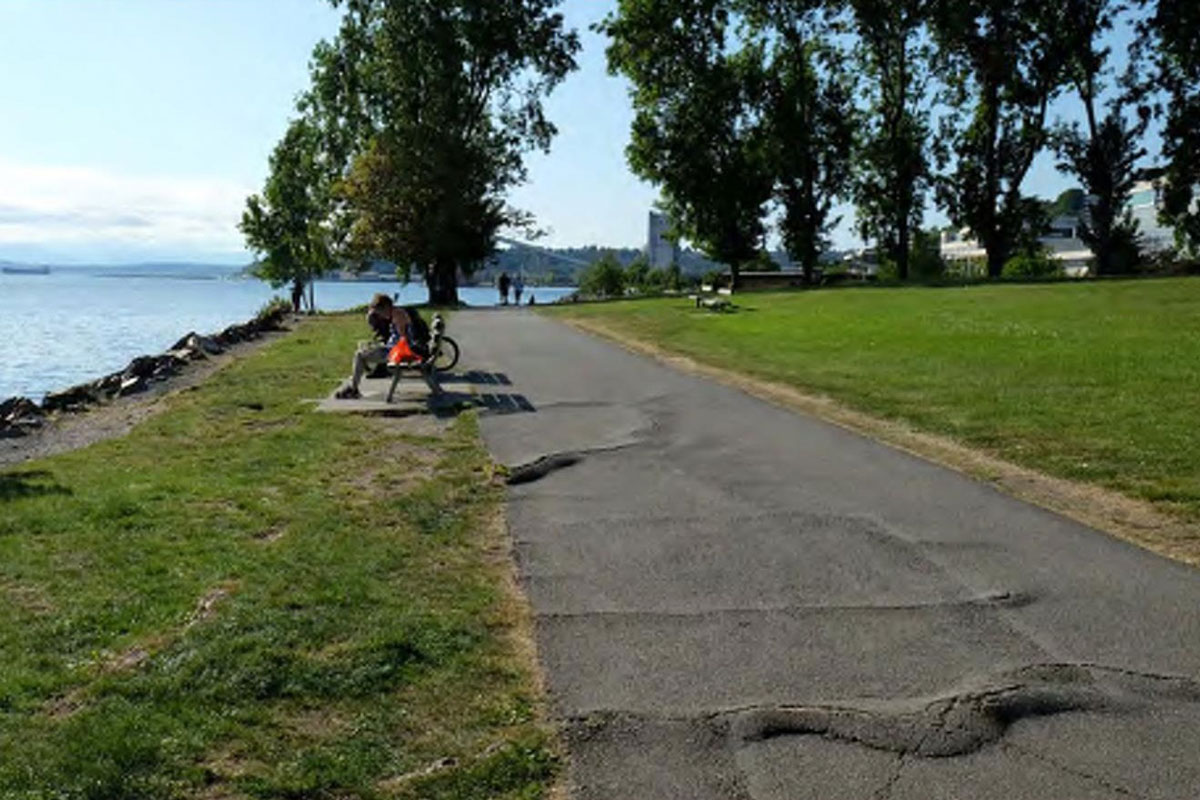
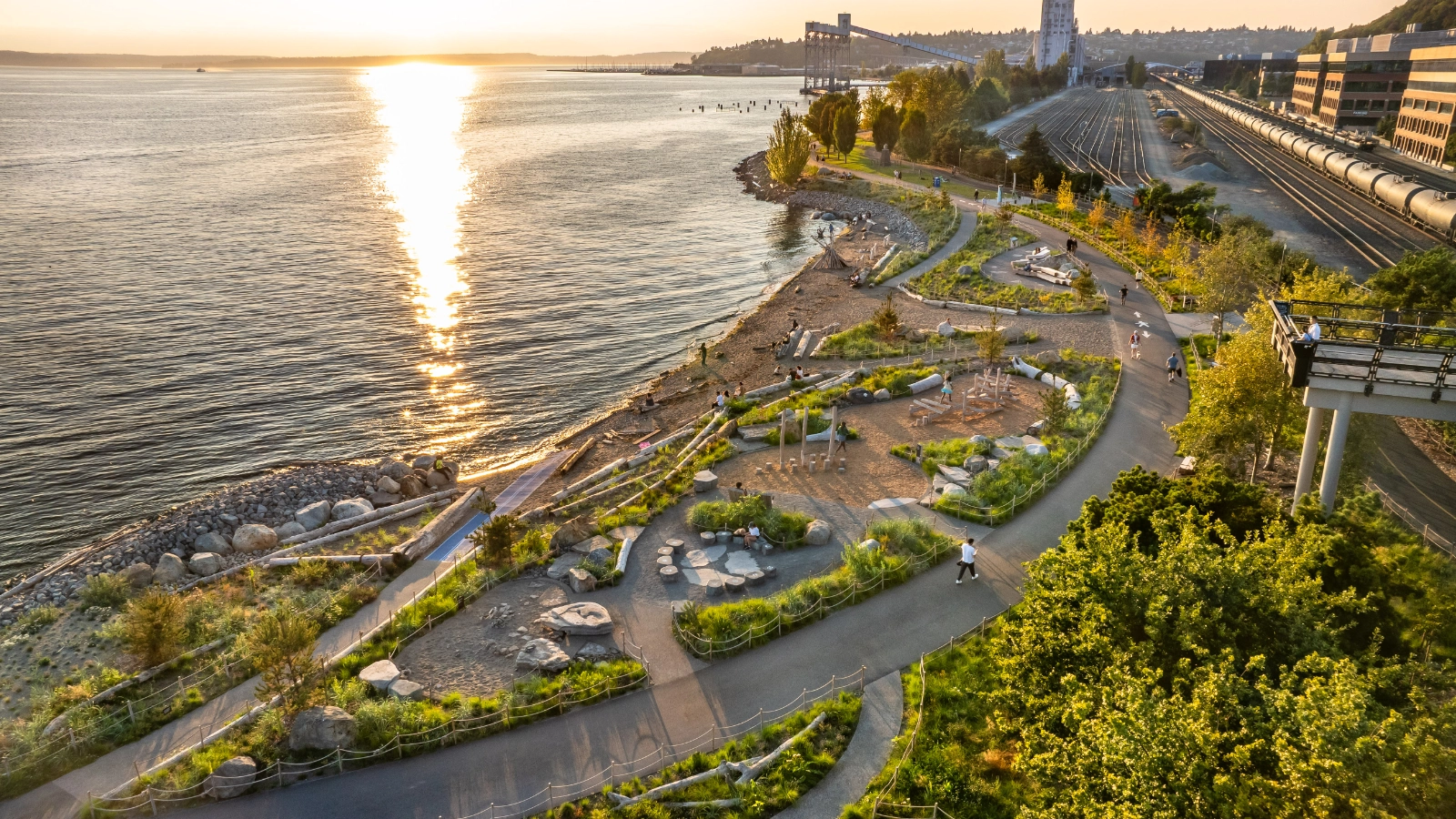
Elliott Bay Connections (EBC) restored and revitalized Myrtle Edwards and Centennial Parks by honoring their spectacular waterfront setting and preserving their unique experience of green landscape and beaches meeting the Elliott Bay shoreline. EBC project improvements added many new features in the parks.
New features in Myrtle Edwards and Centennial Parks:
- Abundant native plantings, including plants used in Indigenous food systems, pollinator meadows and reseeded lawns
- Newly planted trees, selected for their shade canopy and hardiness as native species
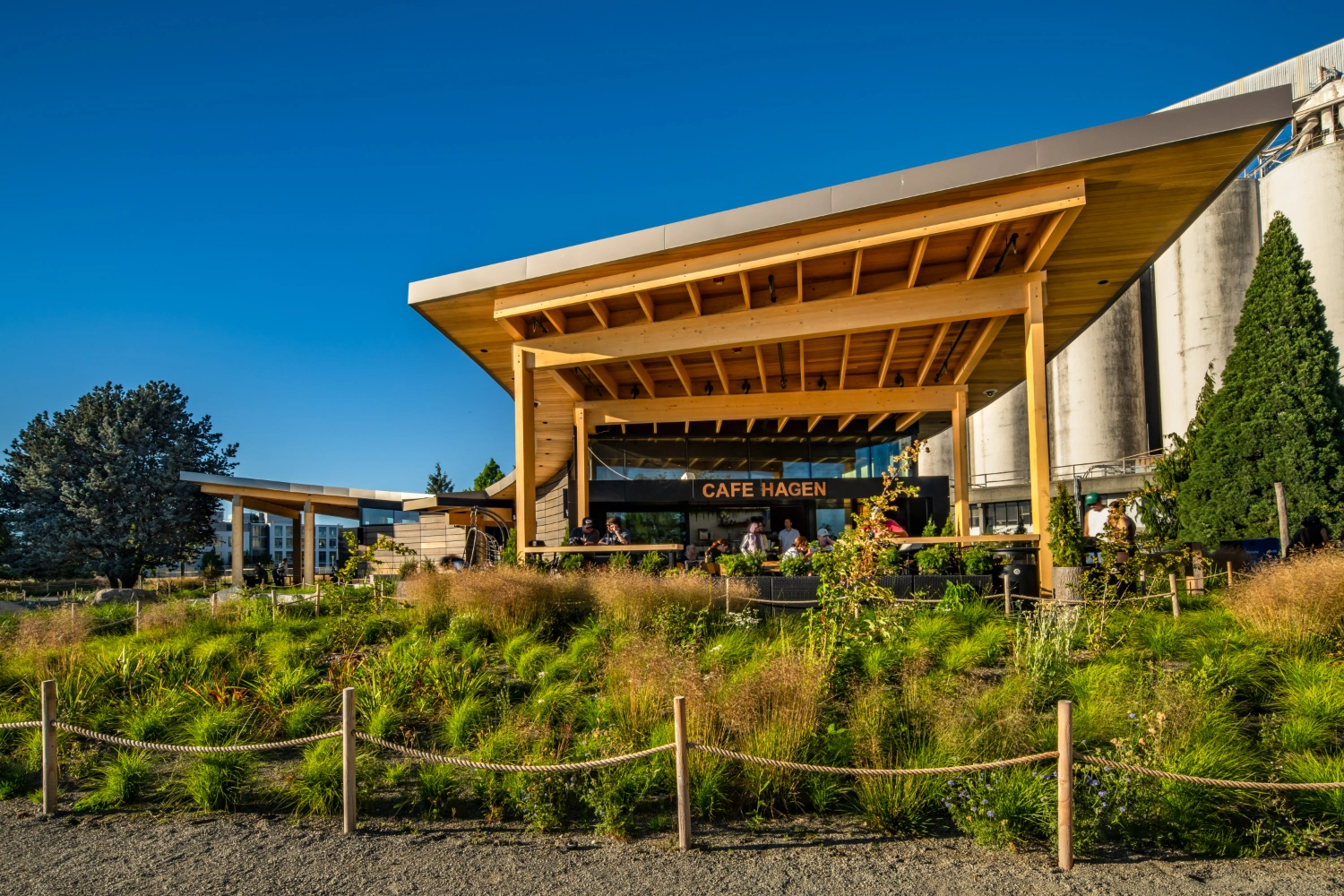
- haʔłali (“the good place”), a new public amenities building with restrooms, and Café Hagen, a new food and beverage concession
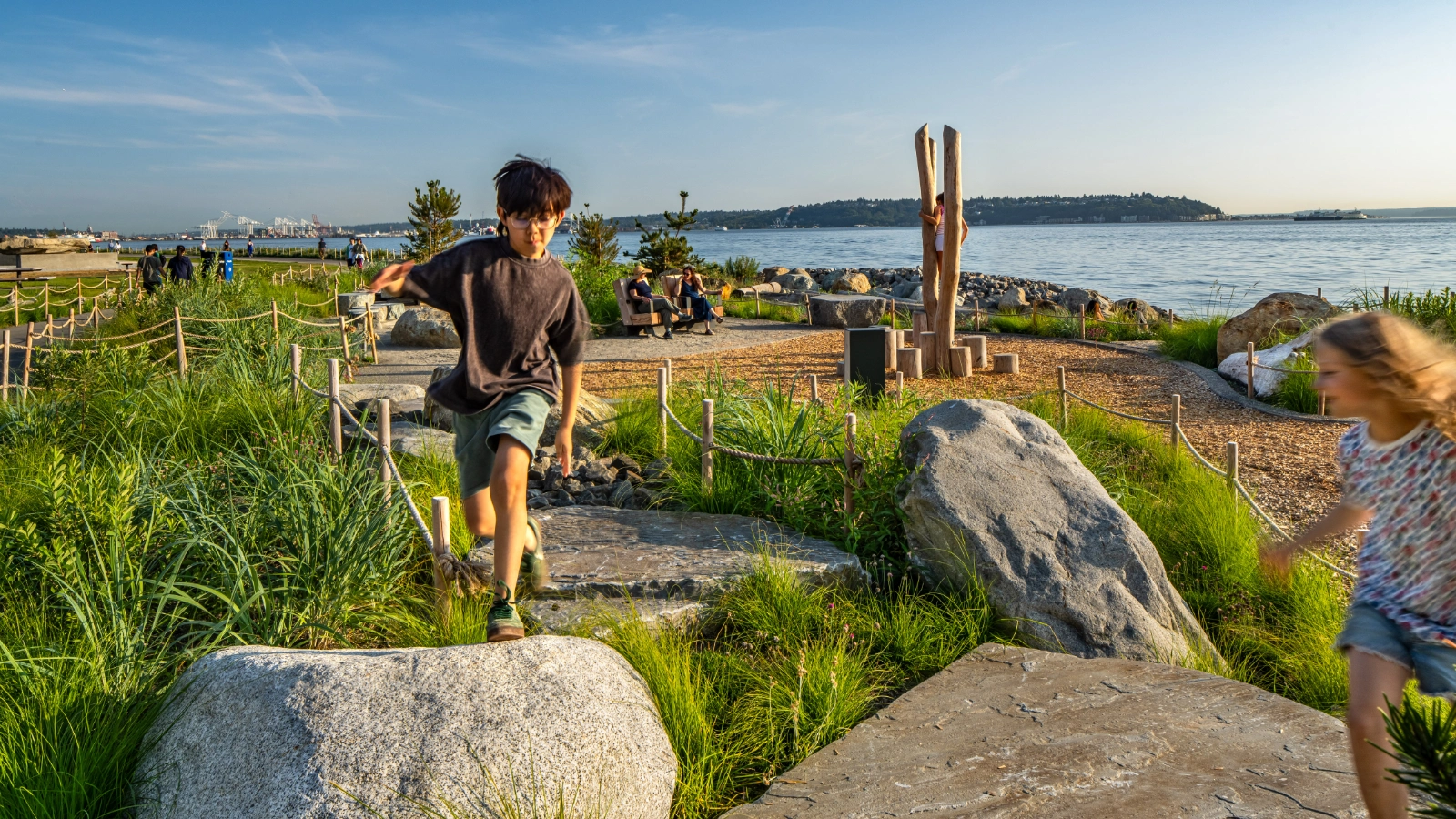
- New children’s exploration area
- Expanded beach coves with improved accessibility for humans and enhanced habitat
- Repaired and enhanced pedestrian paths including a path shoulder for runners and paths through the new landscapes
- New seating and picnic tables replacing obsolete park furniture
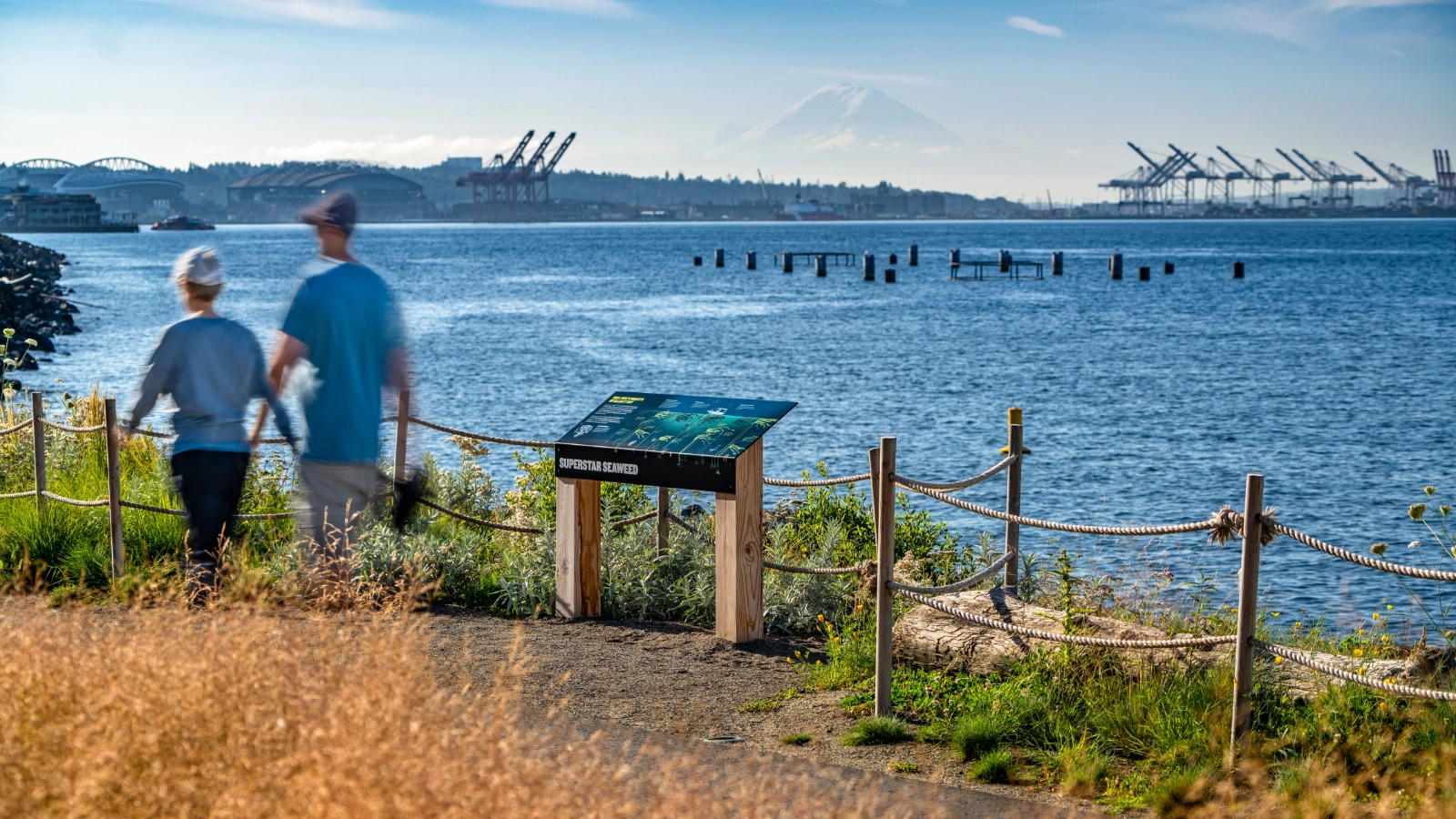
- New comprehensive wayfinding system including maps and signage for all park users
- Renovated and repaved bike trail with lighting, bike racks, bike repair stations and signage
- Accessibility improvements throughout including the accessible children’s exploration area, new accessible paths to the rose garden, beaches and other park areas
Park users can now enjoy a unified experience across 16 acres of free, open public space stretching more than a mile along the shoreline. The EBC project modernized park facilities to be more sustainable, resilient, and accessible for people of all abilities, and thoughtfully incorporated public feedback on park improvements and uses.
haʔłali (“the good place”) Amenities Building
haʔłali pronunciation, courtesy the Port of Seattle:
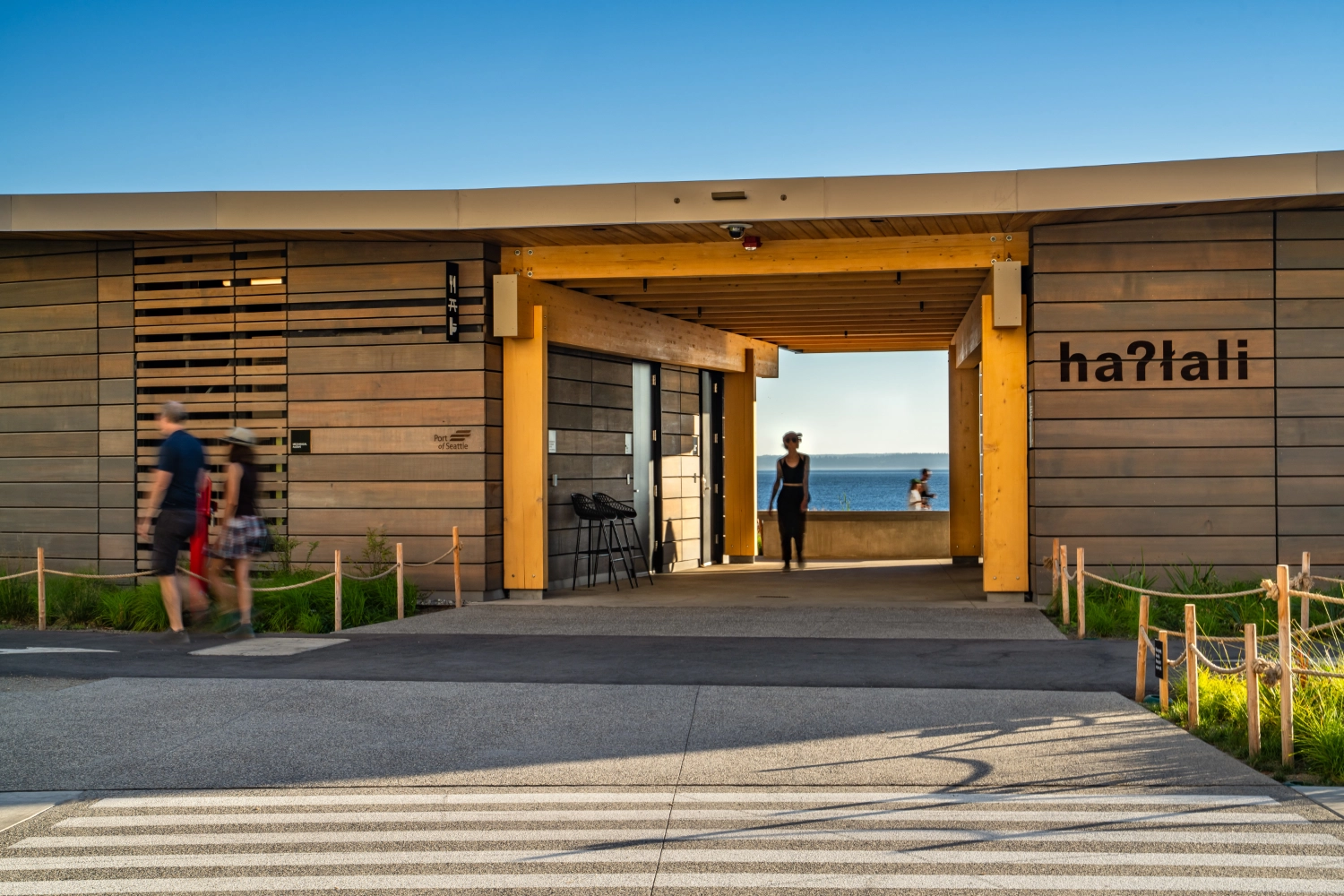
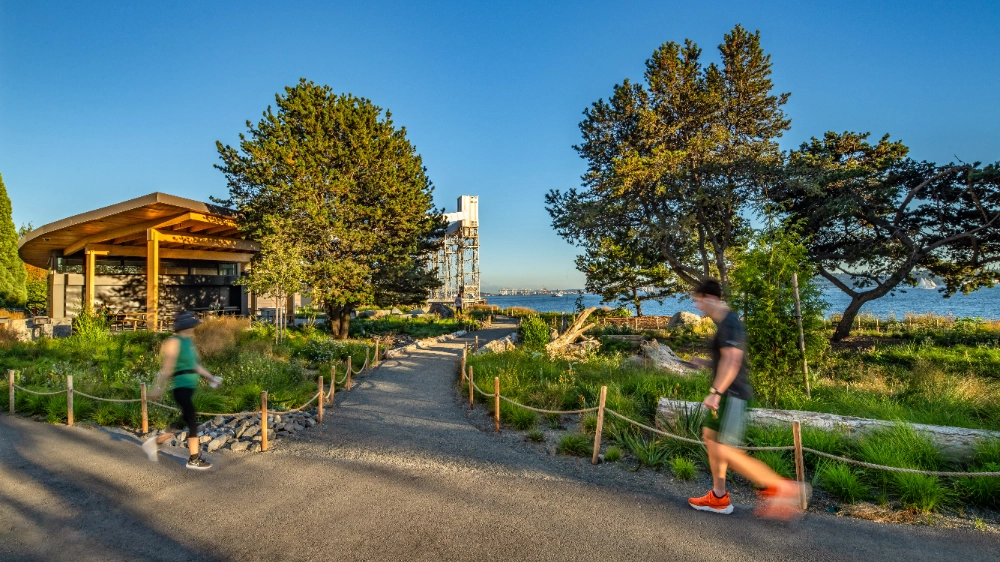
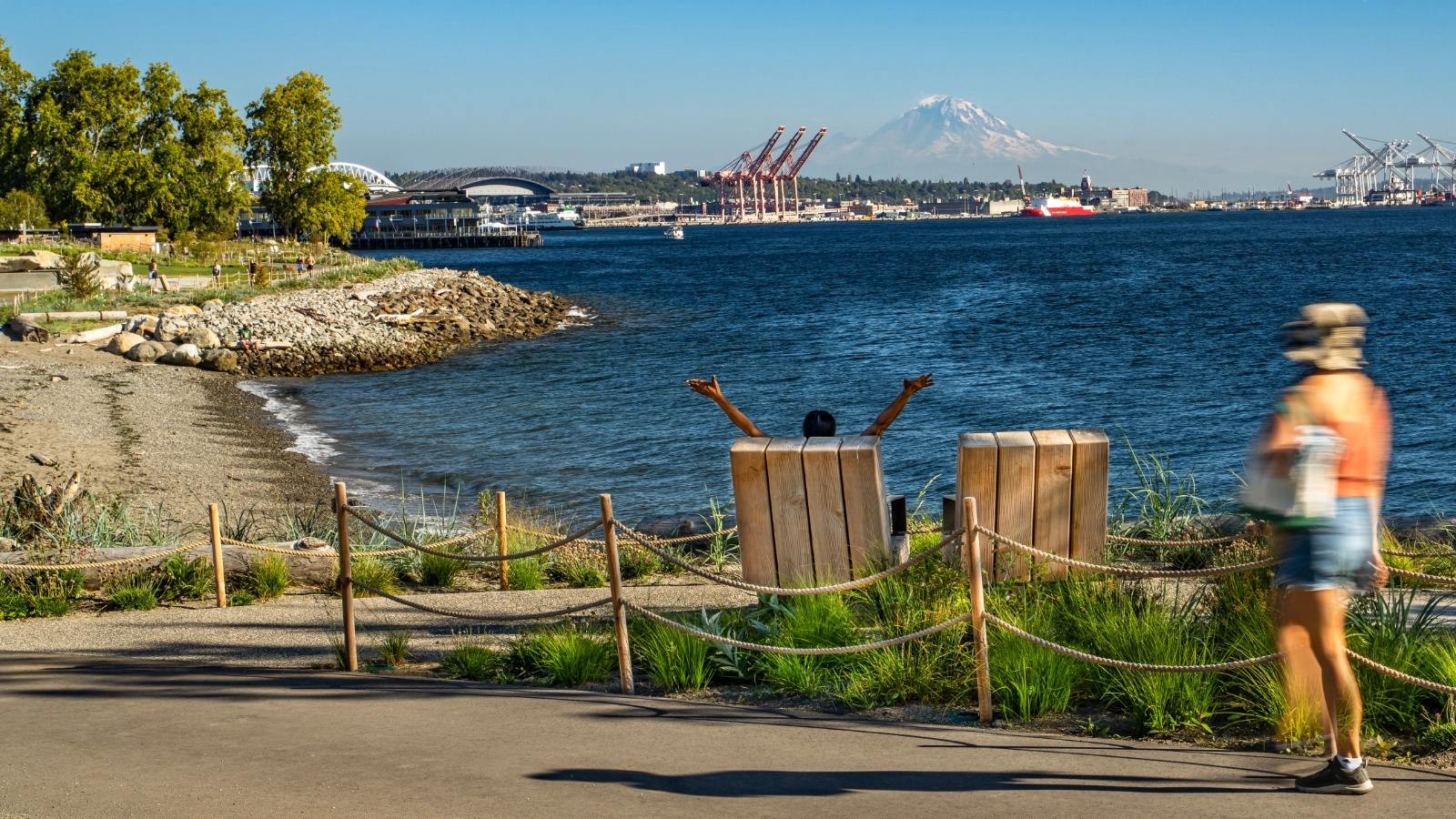
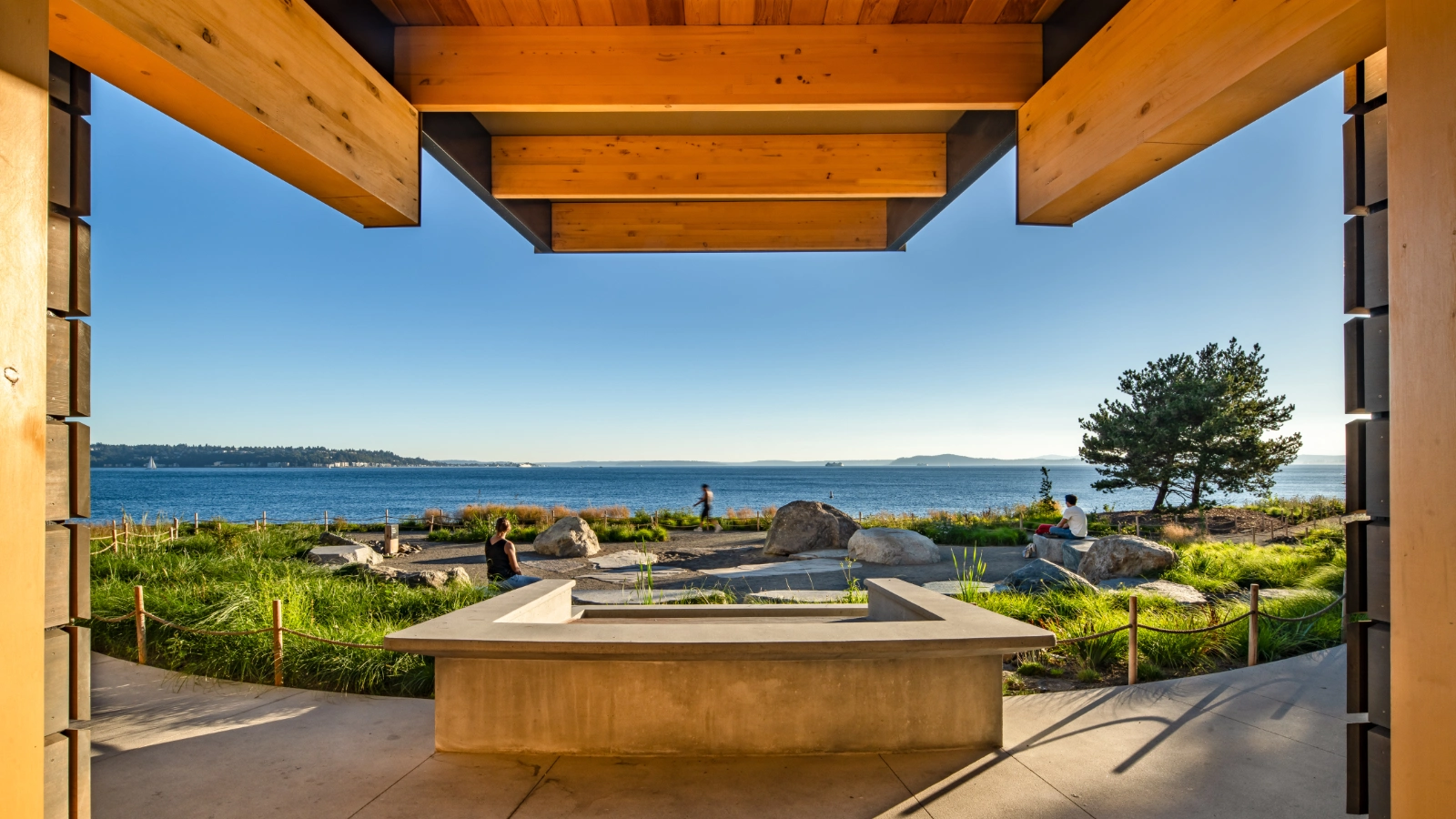
haʔłali, the new amenities building near the Pier 86 Grain Terminal, offers a unique vantage point to enjoy sunsets and views of the sea and the mountains. The name haʔłali was selected by the Suquamish Tribe Cultural Committee to honor the parks as a good place. The building includes restrooms, food and beverage concessions, and other requested park amenities.
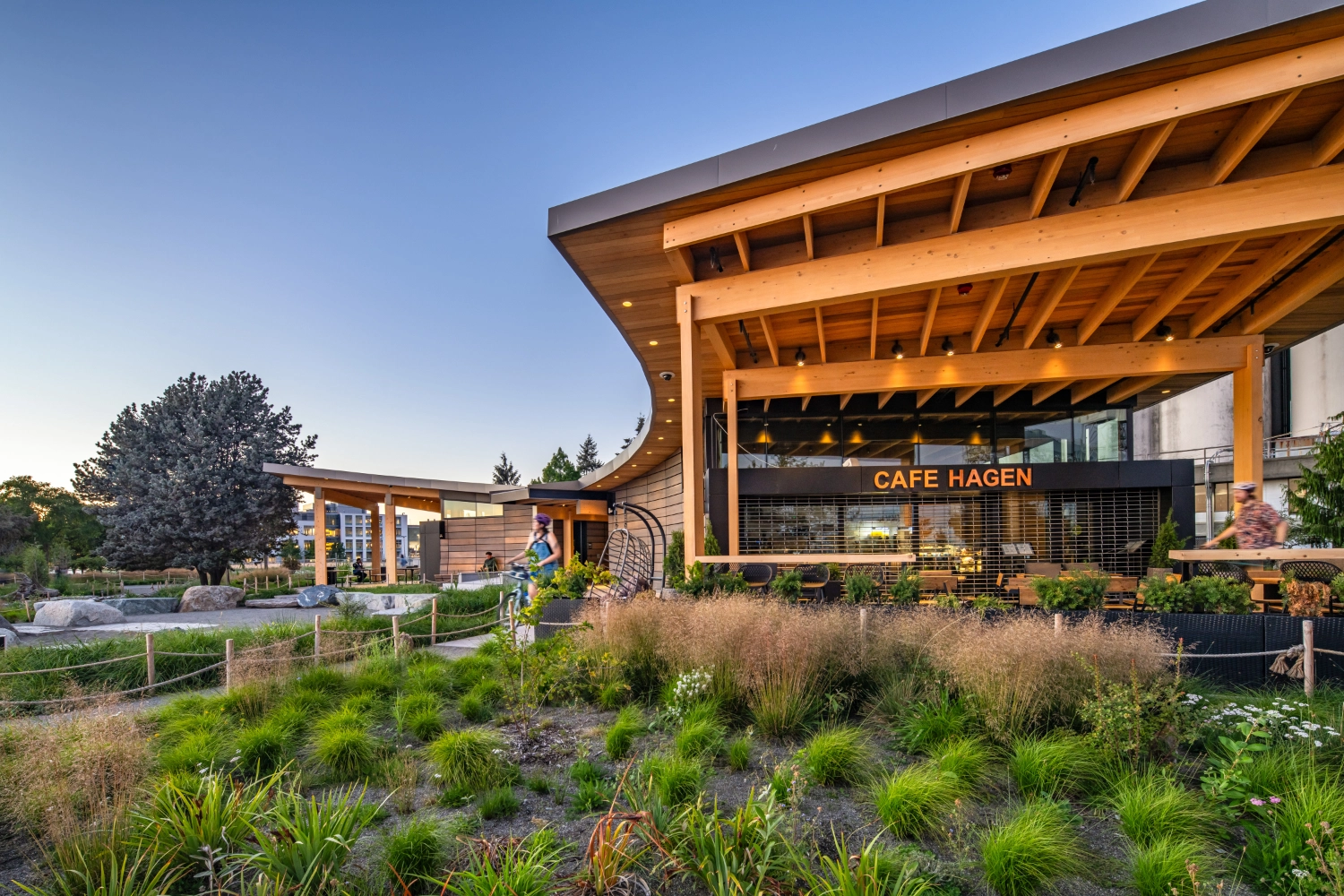
Constructed of red and yellow cedar, the building was designed by Formline Architecture + Urbanism, led by First Nation architect Alfred Waugh. haʔłali’s design integrates the four elements of nature that are the foundation of Coast Salish culture: wind, earth, water and fire. The building is sited to provide protection from wind. Its views west embrace the waters of the Salish Sea while its roof collects rainwater which falls into a basin and is collected to help water the plants. The earth is embodied in the yellow and Western red cedar harvested from trees in the Northwest as well as boulders from the region. The boulders surround an area that could be used for fire during Salmon Homecoming and other gatherings.
The building features gender-neutral and accessible restrooms, with changing tables.
Café Hagen is the food and beverage concessionaire.
Visitors are also welcome to bring their own food and use the picnic tables and gathering area sheltered by haʔłali’s roof. Water is available here and at an adjacent water fountain. haʔłali is owned and operated by the Port of Seattle.
Native Plantings, Pollinator Meadows and Reseeded Lawns
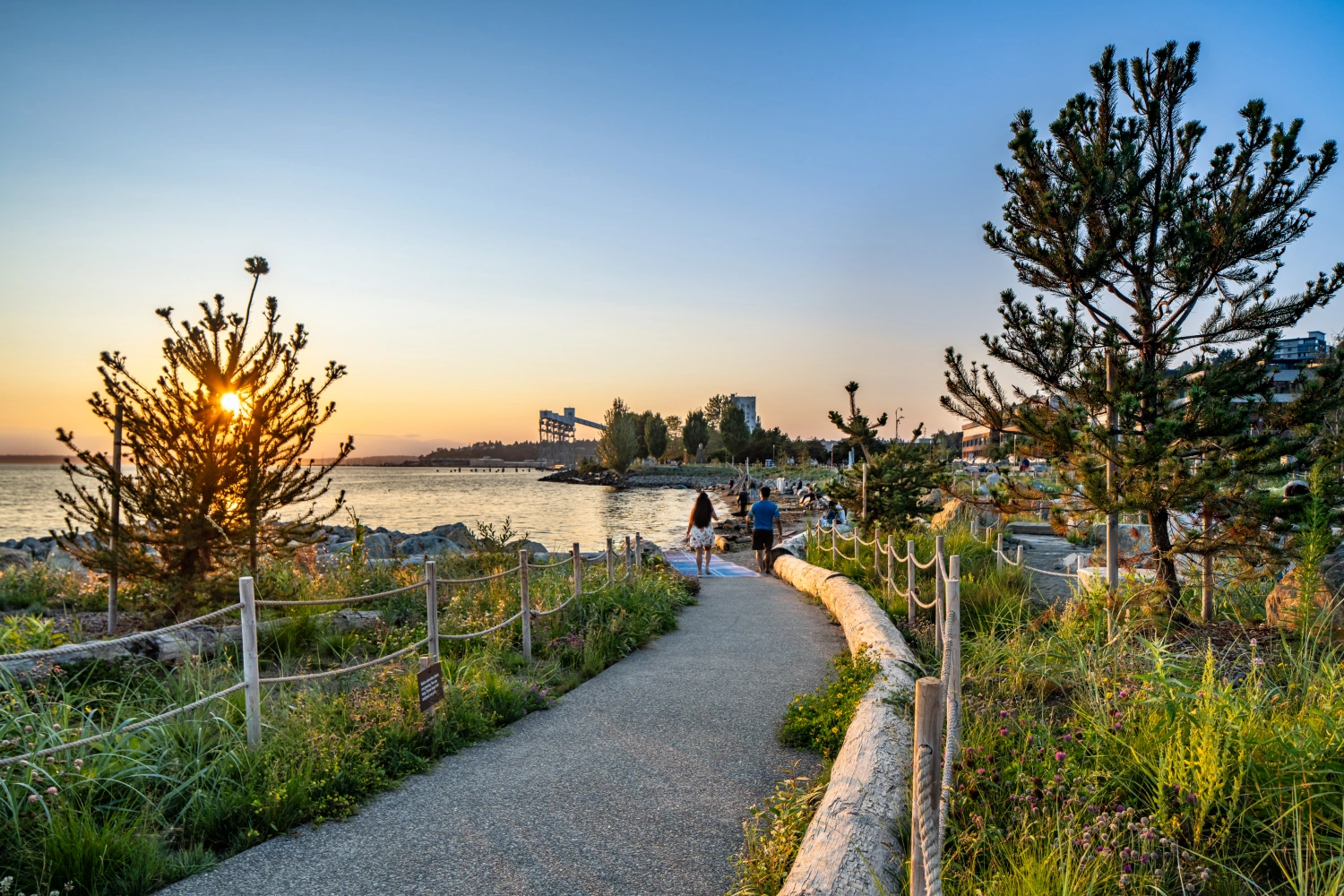
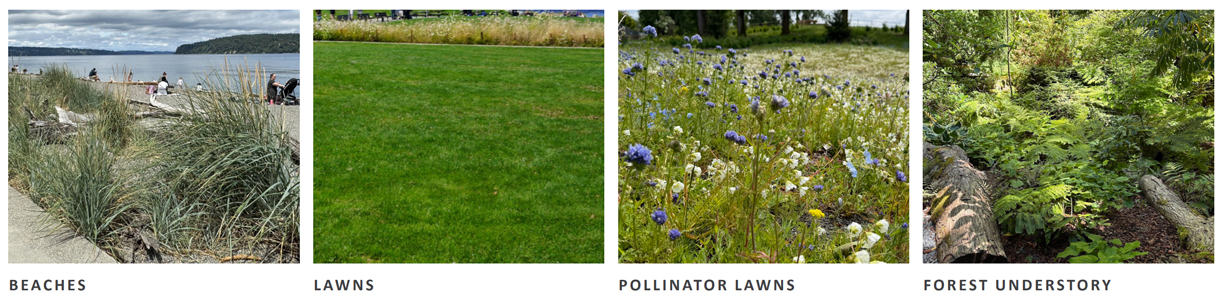
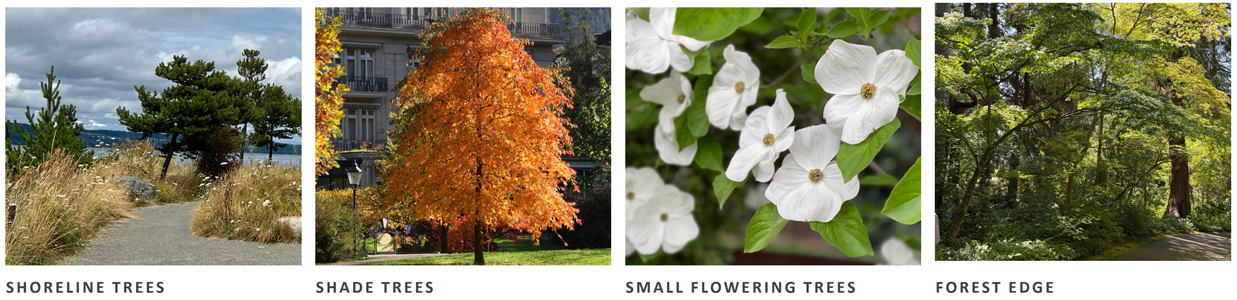
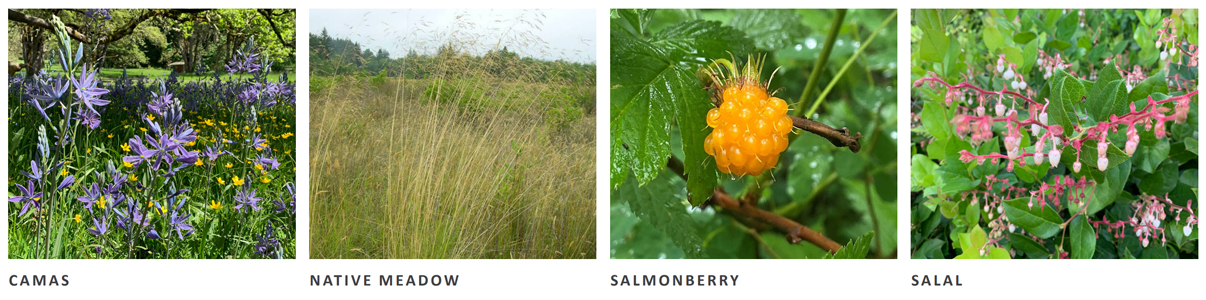
More than 74,000 native plants and 282 trees were planted in the parks. Many of these native plants were planted as tiny seedlings. New planting beds feature native and street-hardy trees, shrubs, and perennials.
The galleries illustrate the range of new plantings and trees.
13 Moons
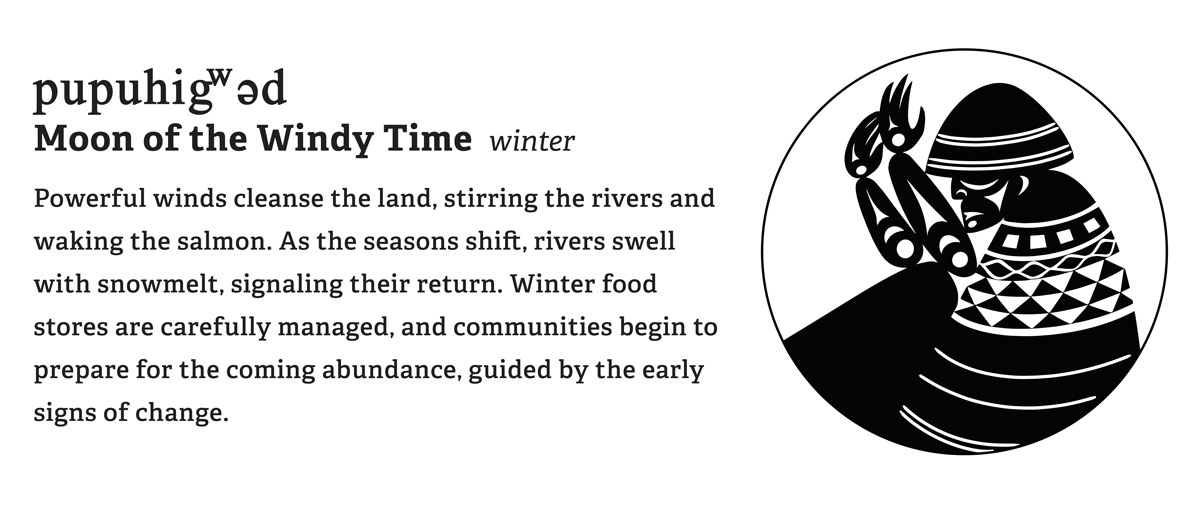
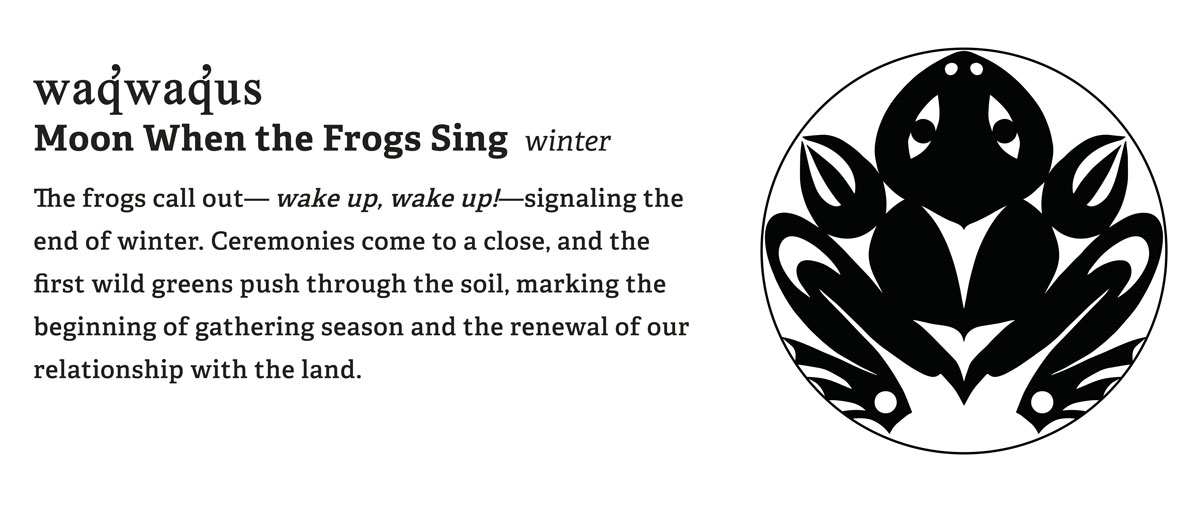
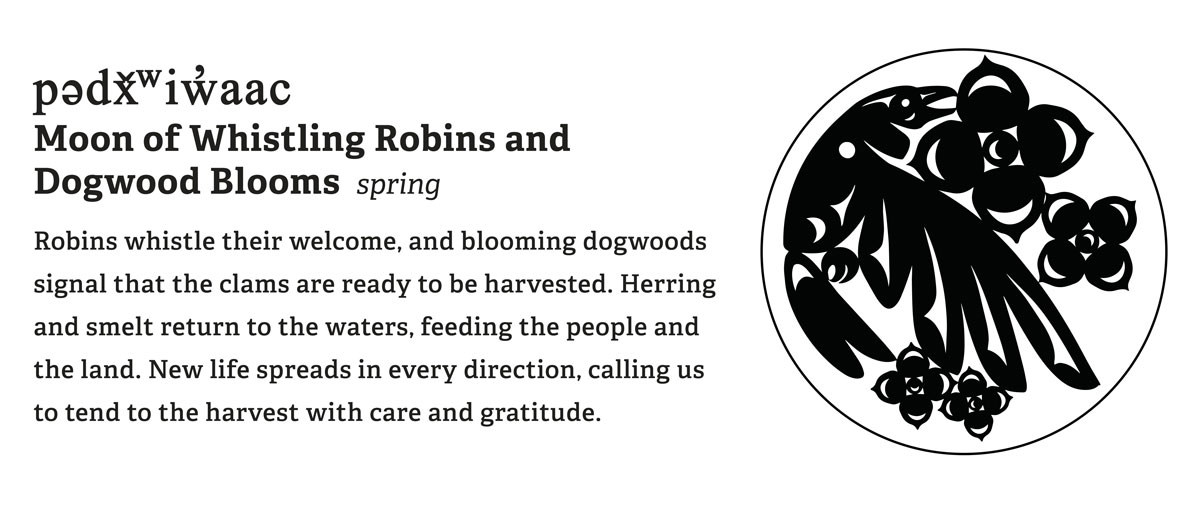
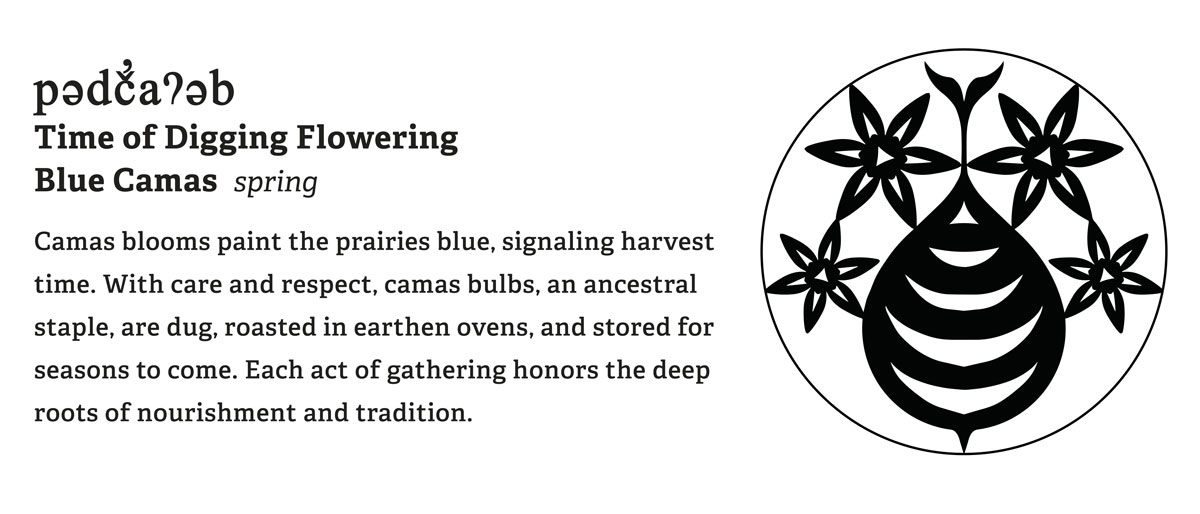
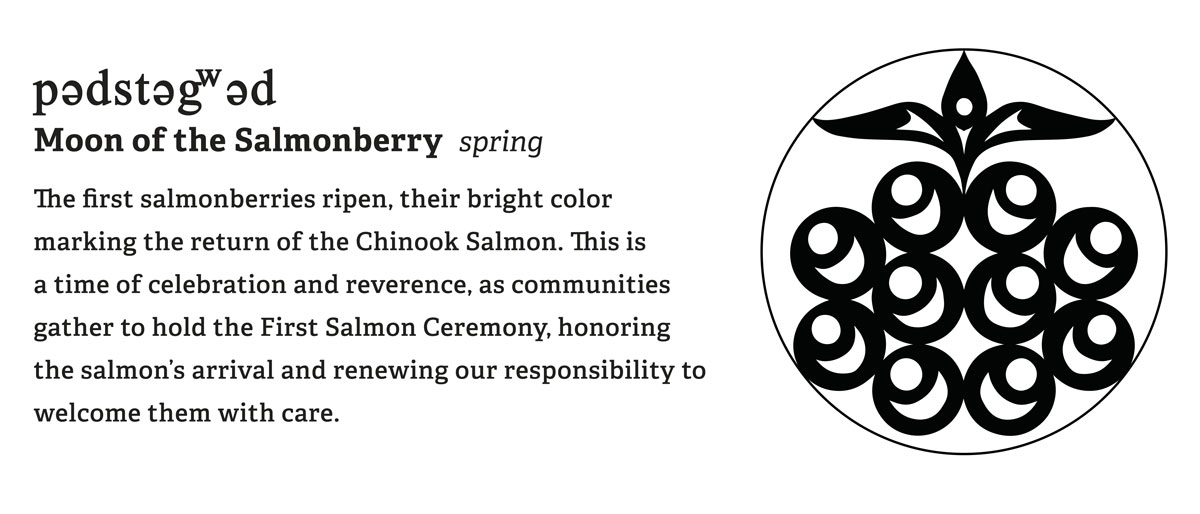
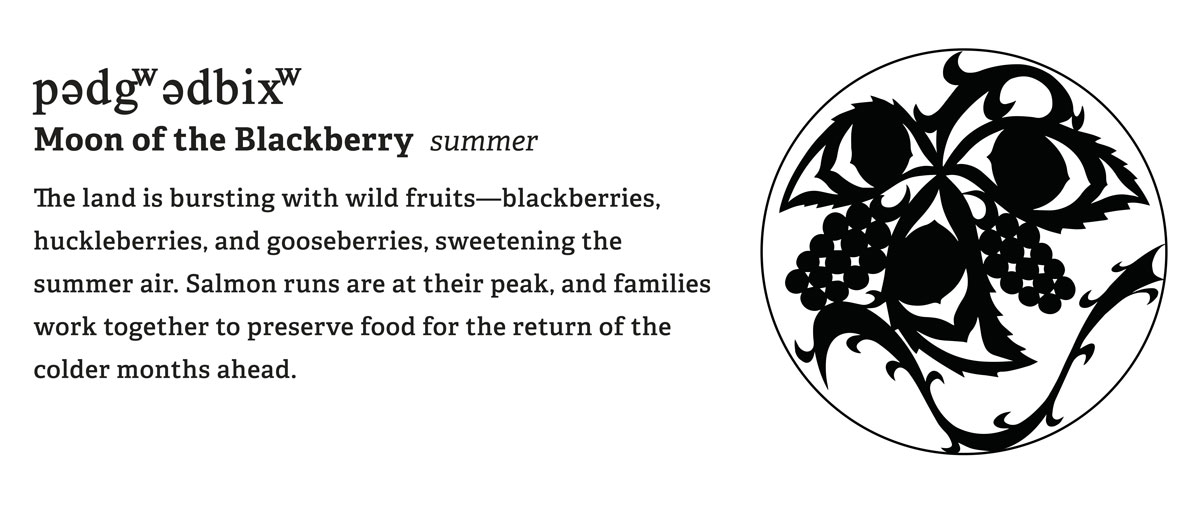
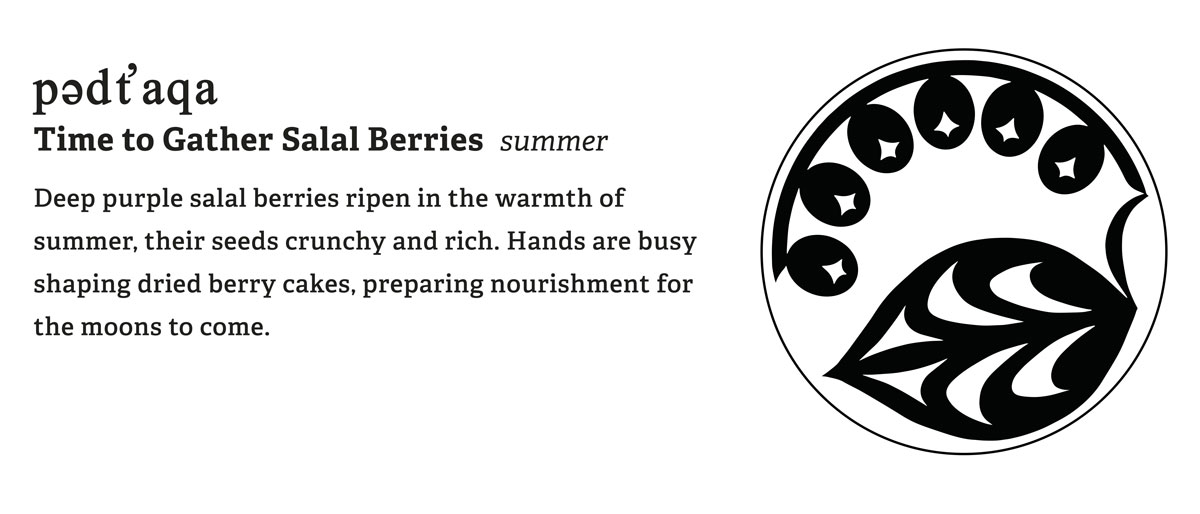
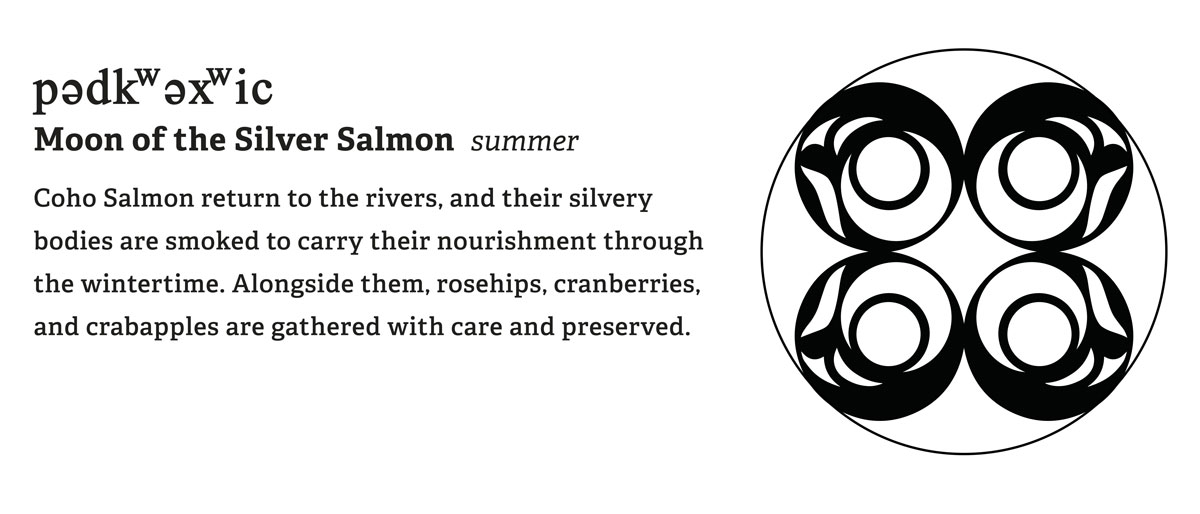
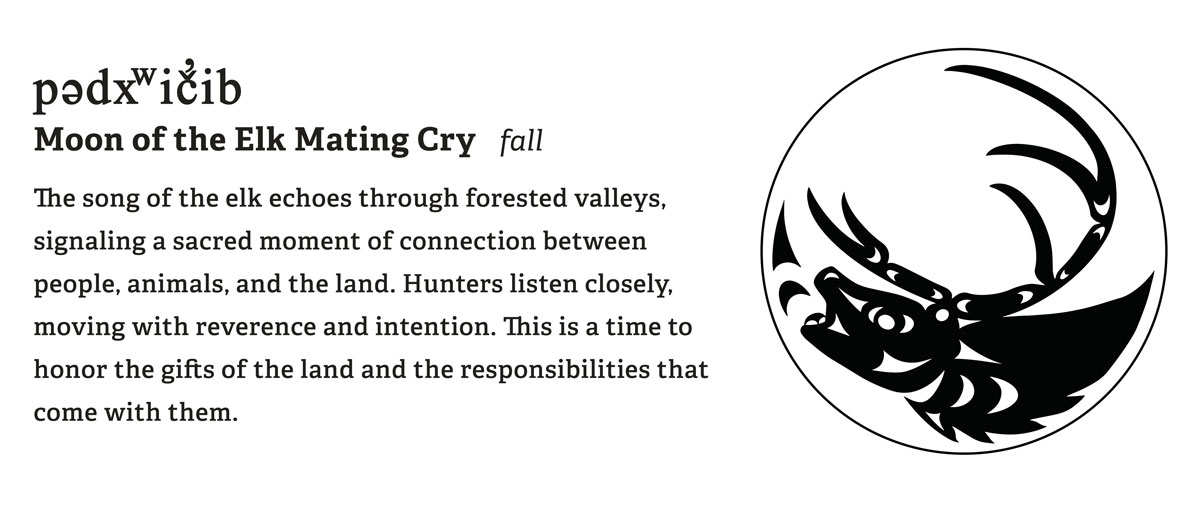
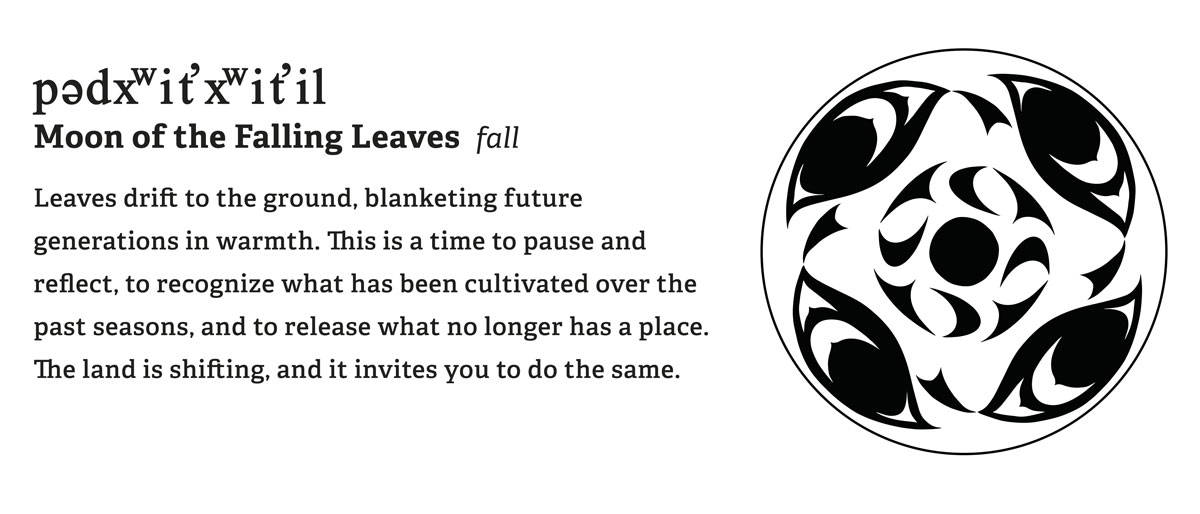
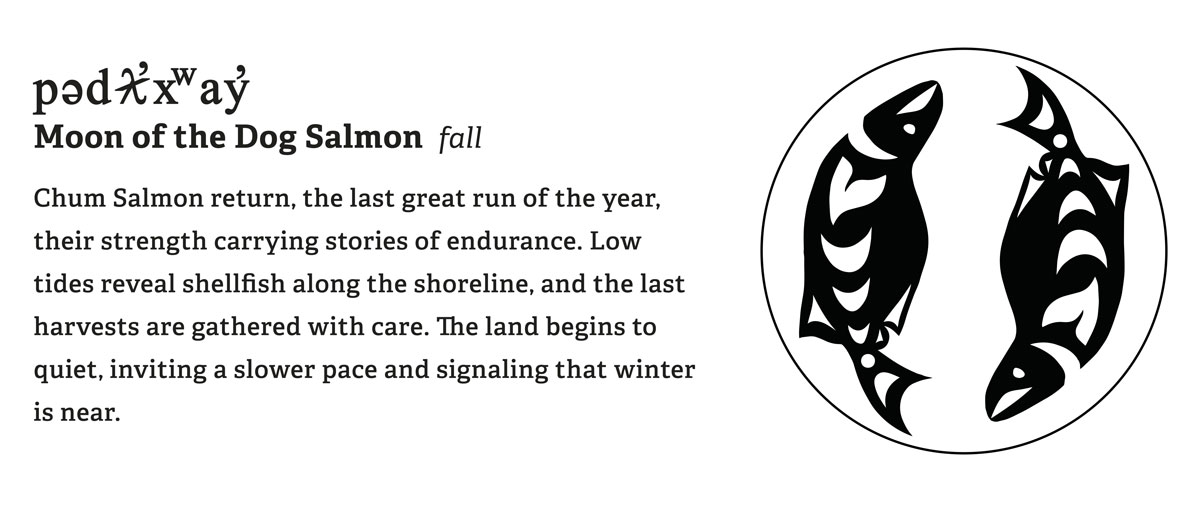
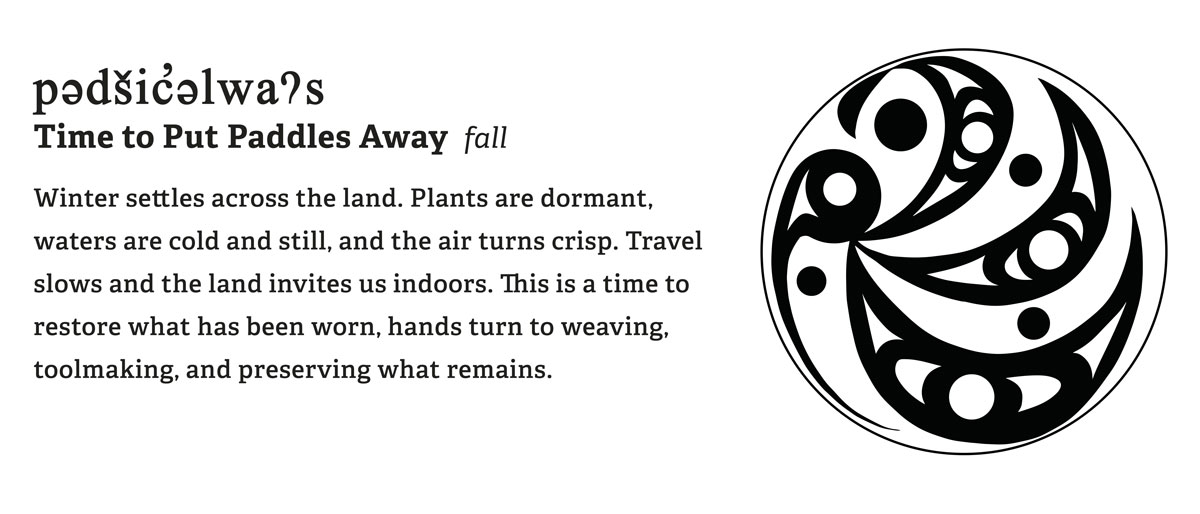
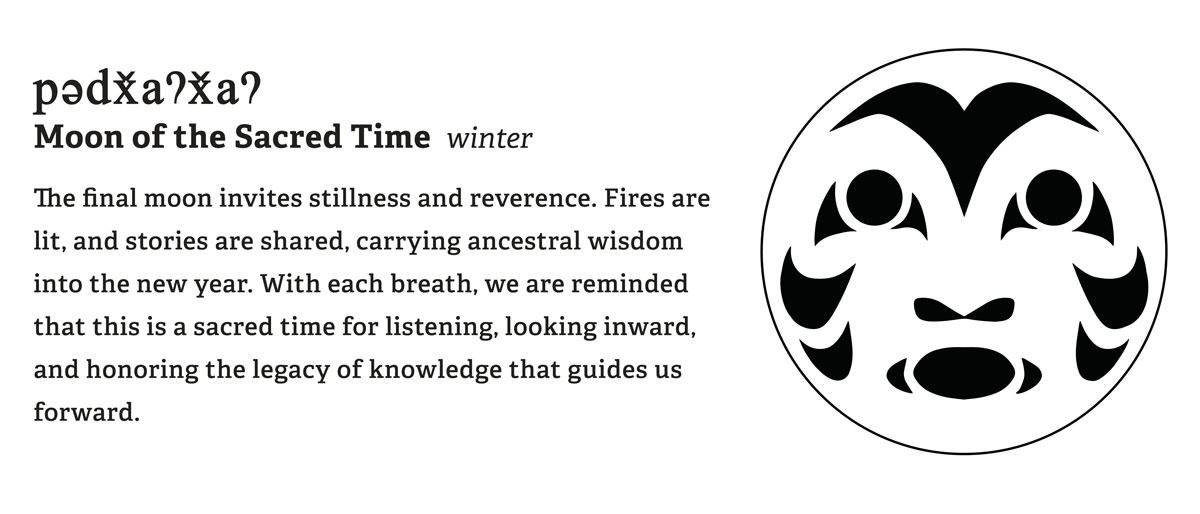
The Coast Salish lunar calendar follows the natural rhythms of the land and water. Each of the 13 Moons signals changes in weather, plant growth, animal migration, and traditional food harvests.
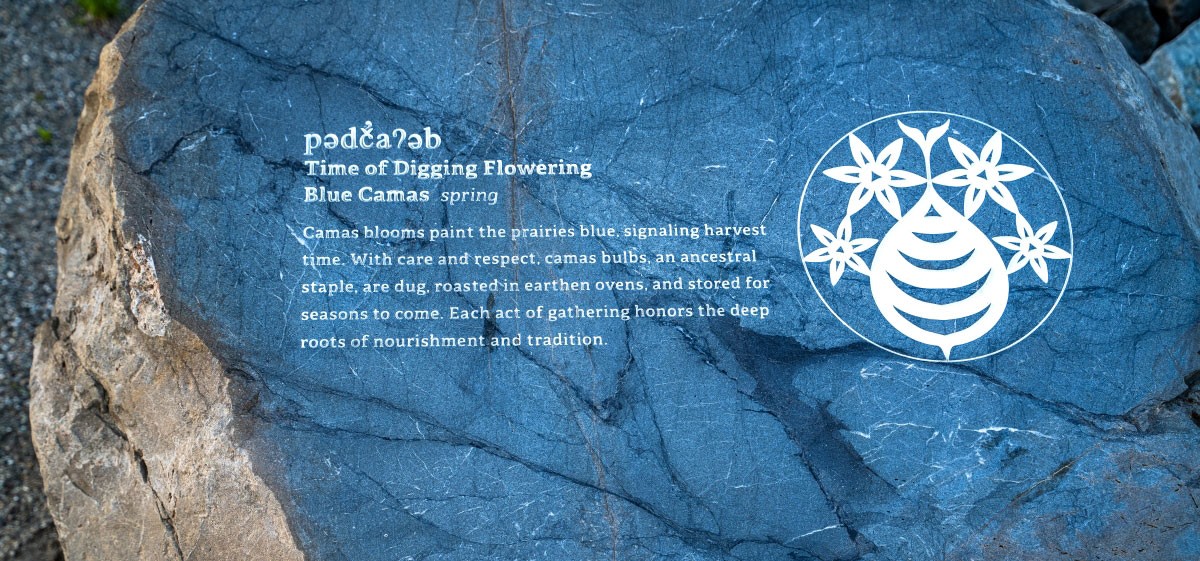
Thirteen boulders placed in the park each narrate the story of one of the 13 Moons, with plantings nearby that honor each moon and traditional Indigenous food systems. Valerie Segrest (Muckleshoot) worked with the Muckleshoot Language Committee on the text displayed and selected the plants. Anabel Baker (Samish) drew an illustration for each moon.
For more information about the parks, please visit:
Greenway
Before
After
Before
After
Before
After
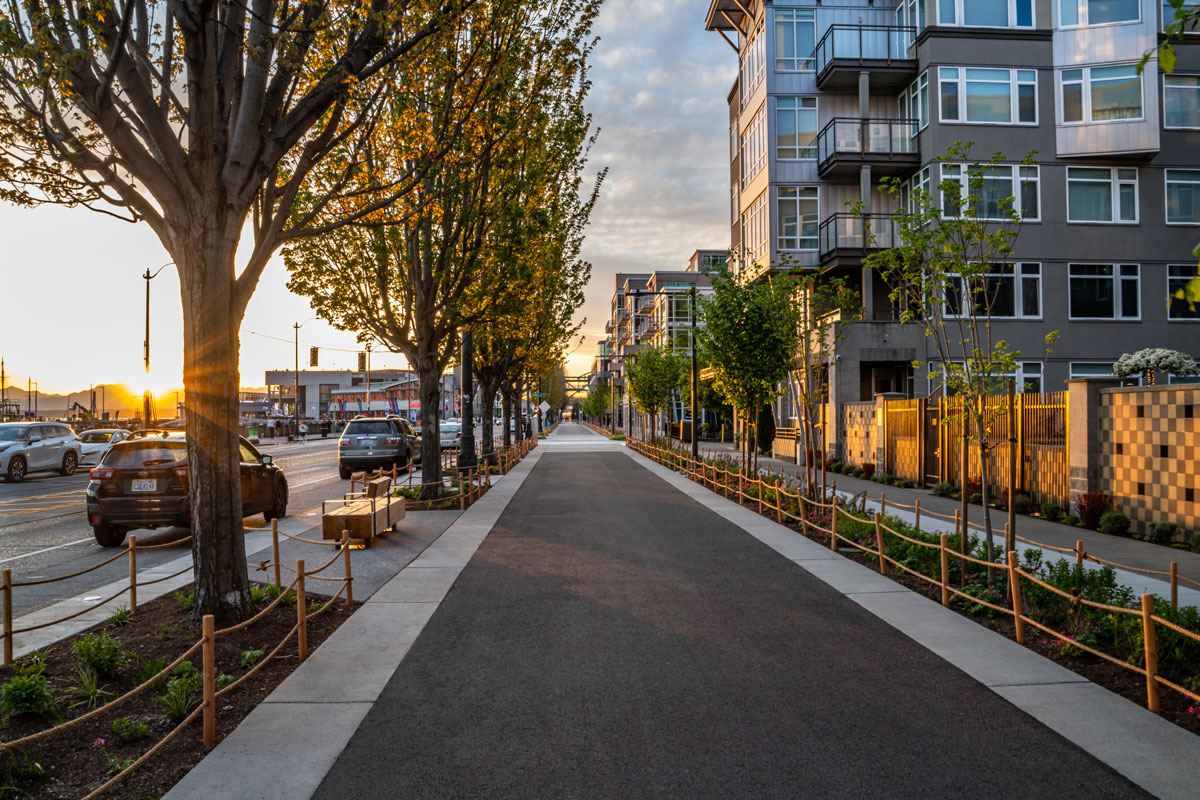
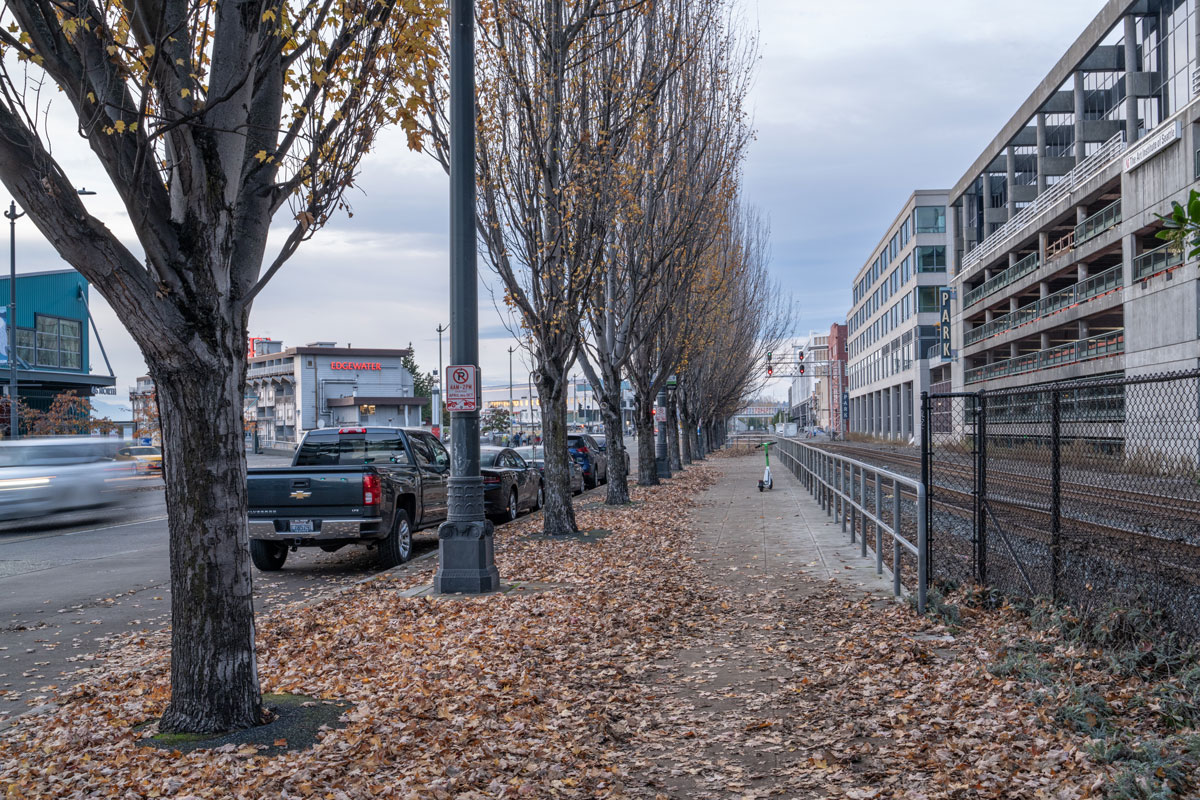
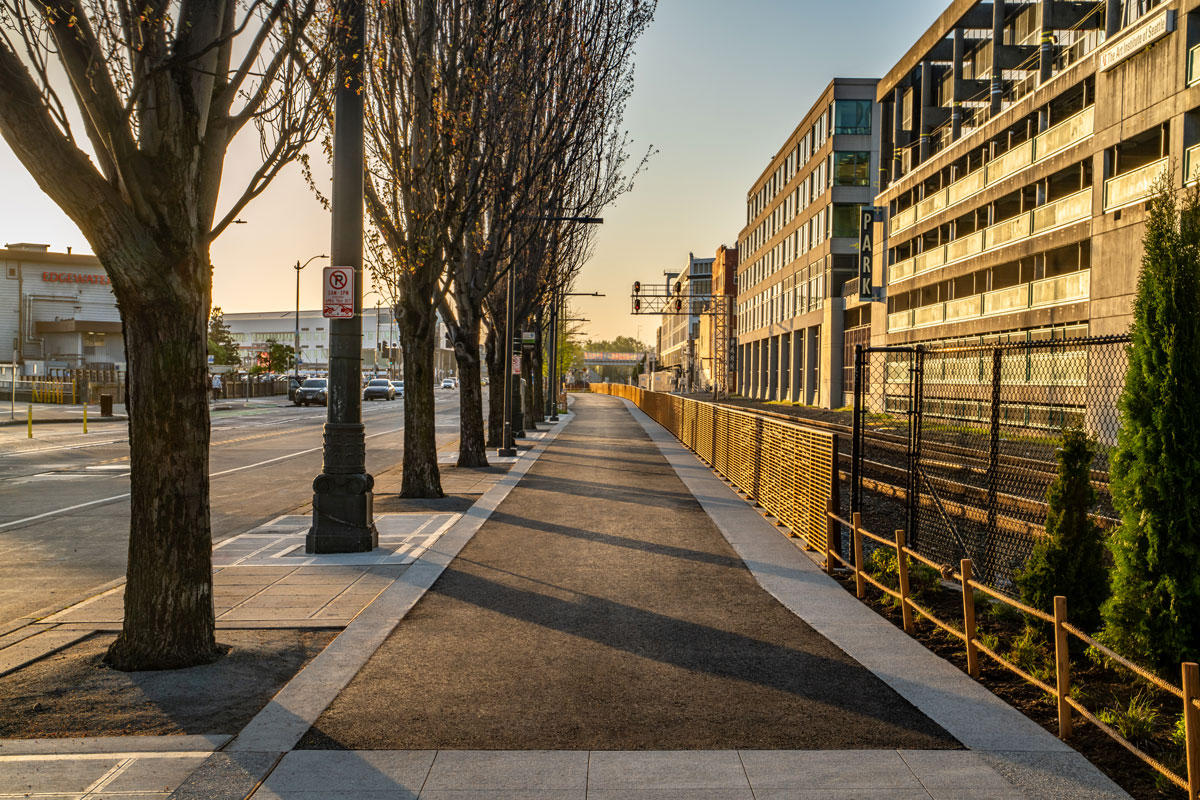
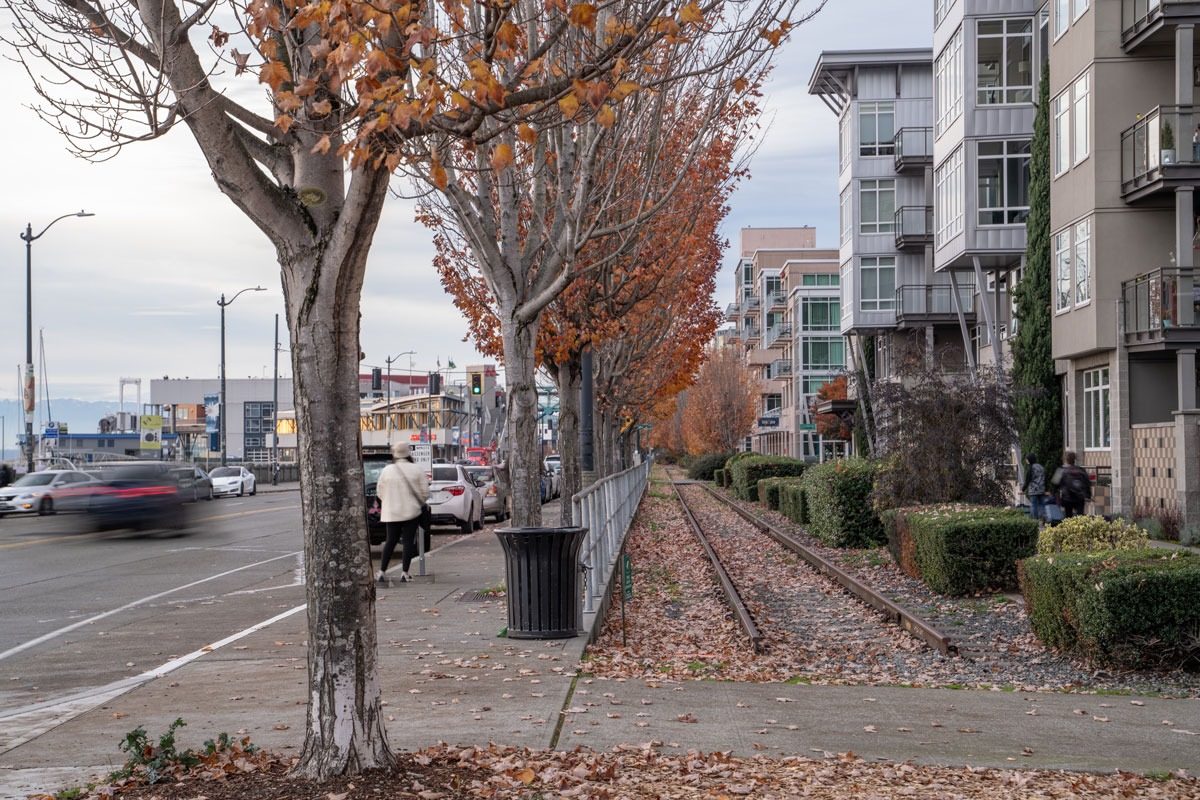
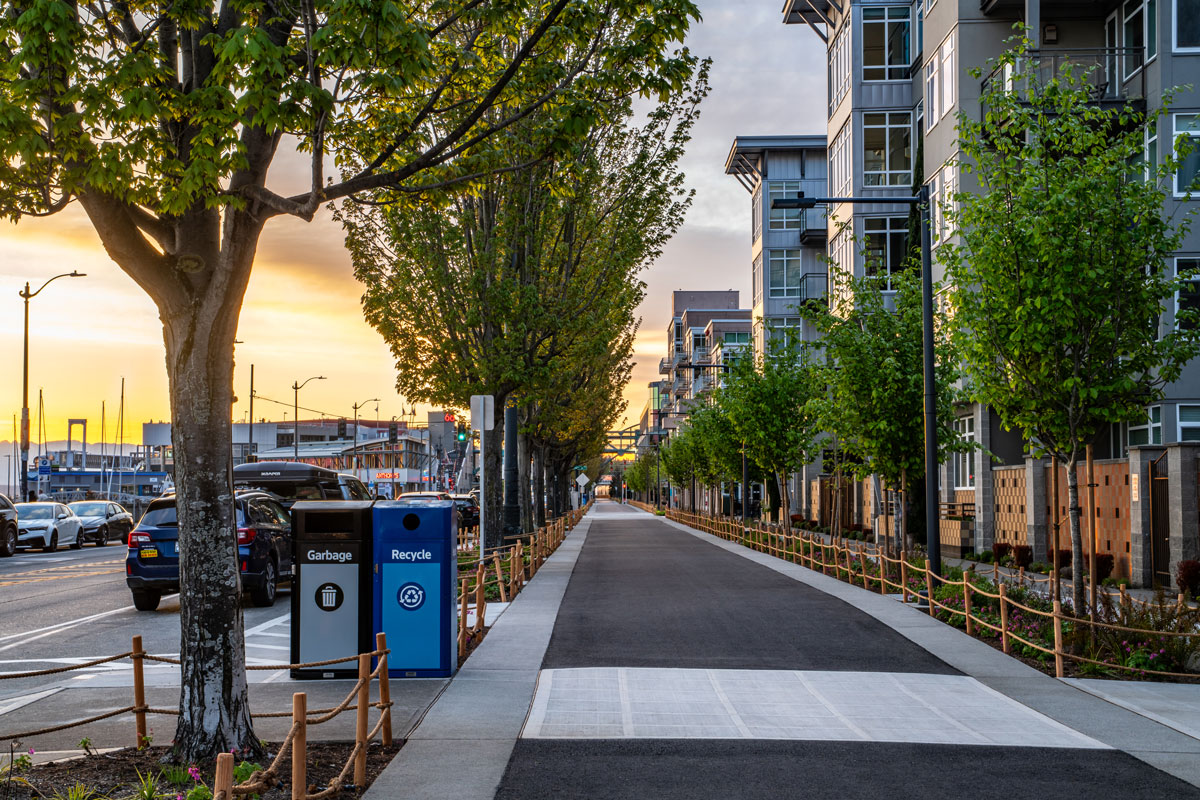
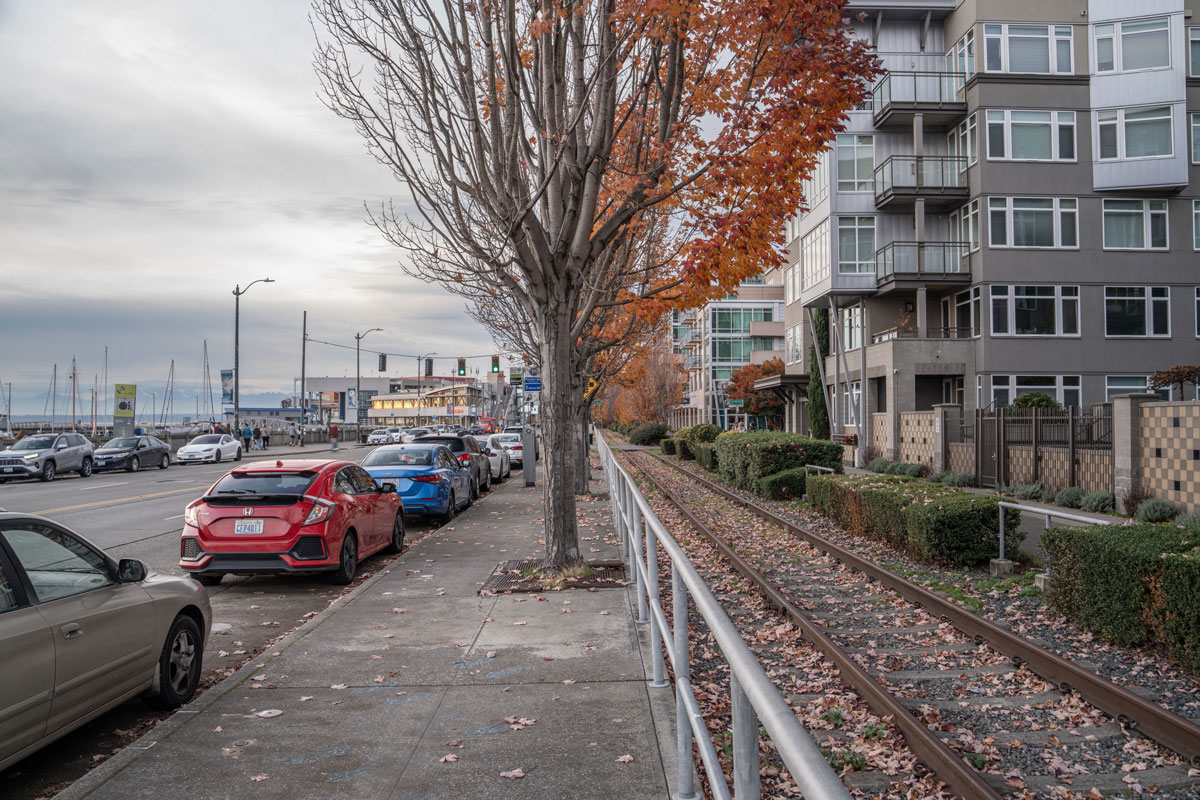
The EBC project constructed a new greenway on the east side of Alaskan Way, from Virginia Street to Clay Street, connecting Waterfront Park (at Pier 62) to the Olympic Sculpture Park (at Pier 70). Opened on April 21, 2026, the greenway enables people to travel in green on this ¾ mile stretch of Alaskan Way, with new plantings, trees and benches along the way.
Greenway Features:
- A new multi-use trail designed for people of all ages and abilities walking, biking and rolling
- Newly planted beds with native and street-hardy trees, shrubs and perennials line the trail
- Improved soil conditions to support health of existing trees
- Maps and signs to provide directions to the waterfront and nearby neighborhoods
- Additional lighting and benches for resting
- Complements the Seattle Department of Transportation’s (SDOT) Alaskan Way Safety Project, a new two-way protected bike lane on the west side of Alaskan Way
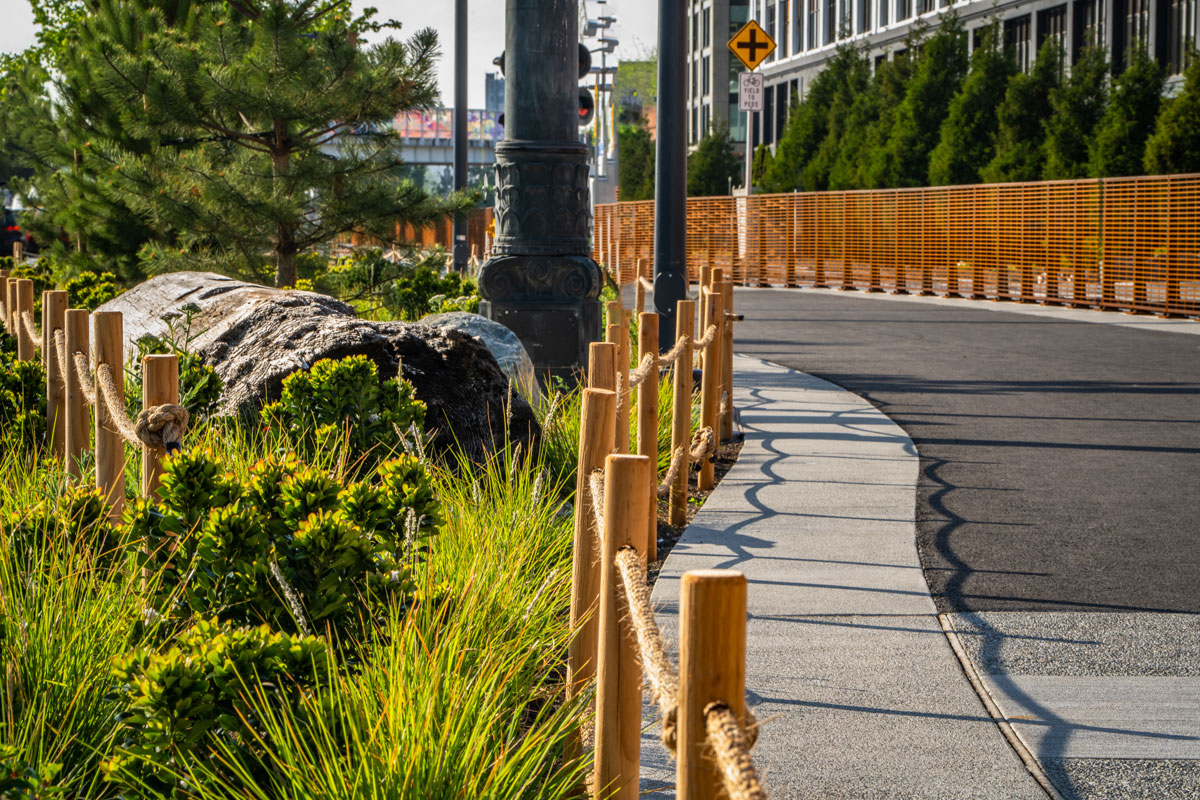
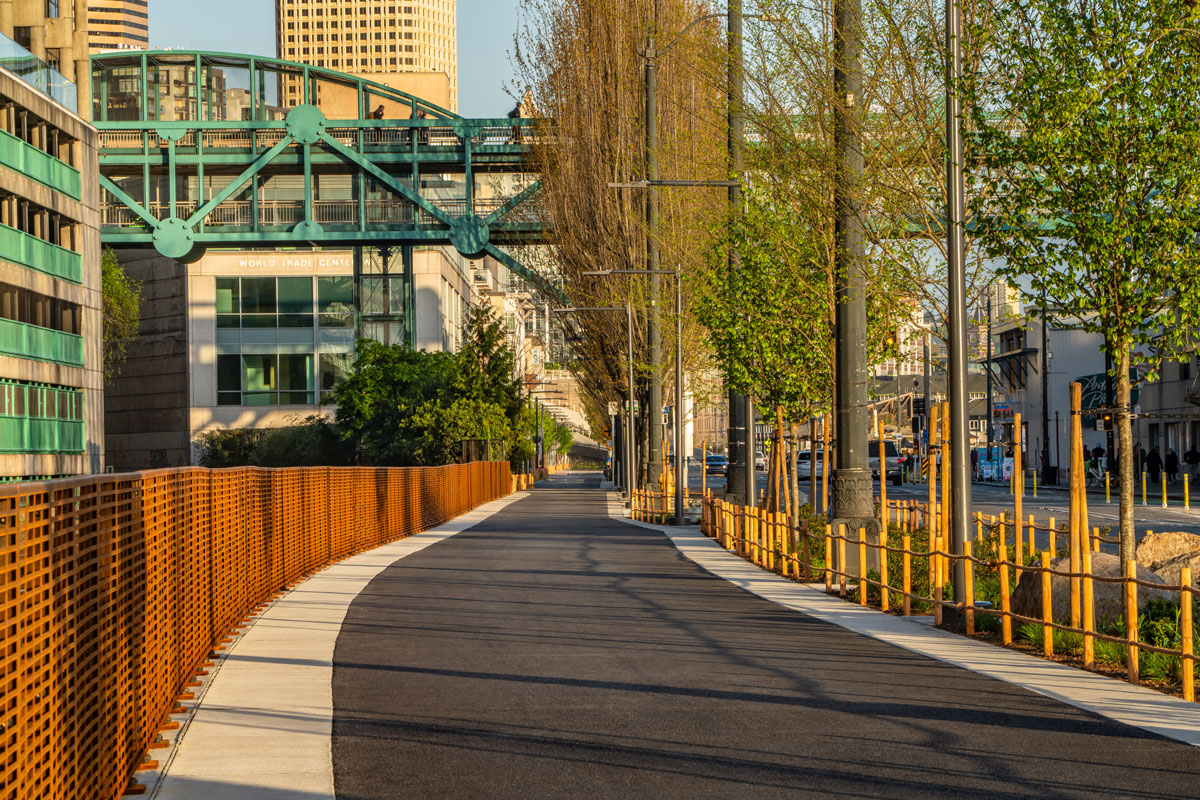
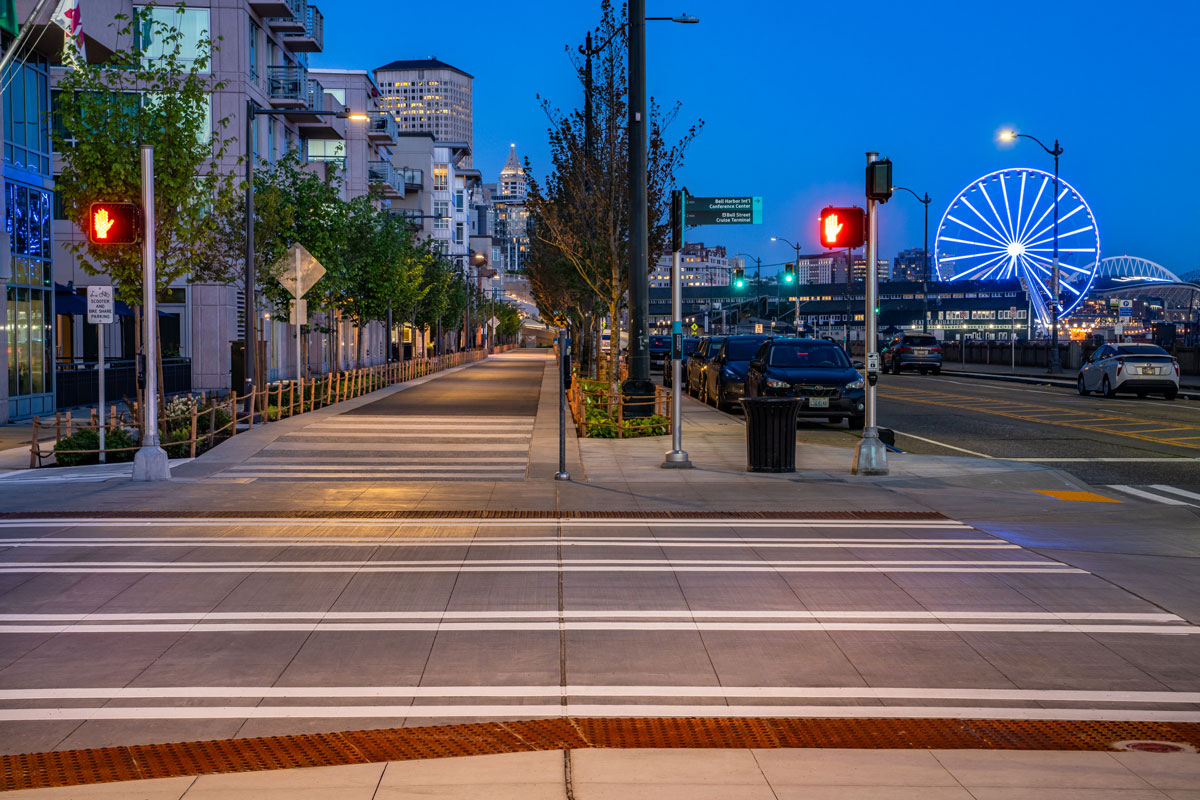
As a public space, this greenway is owned by the City of Seattle. SDOT reviewed and approved the greenway design and construction, and will continue to manage signals, crossings, and the functioning of this corridor as part of Seattle’s overall street network. For more information on multi-use trails in Seattle, visit Multi-Use Trails - Transportation | seattle.gov.
Helping New Plants and Lawns Grow
The greenway has a lot of plants! More than 15,000 new plants are growing in the greenway’s landscaped beds. The parks have even more plants with a total of more than 74,000 new plants in Myrtle Edwards and Centennial Parks.
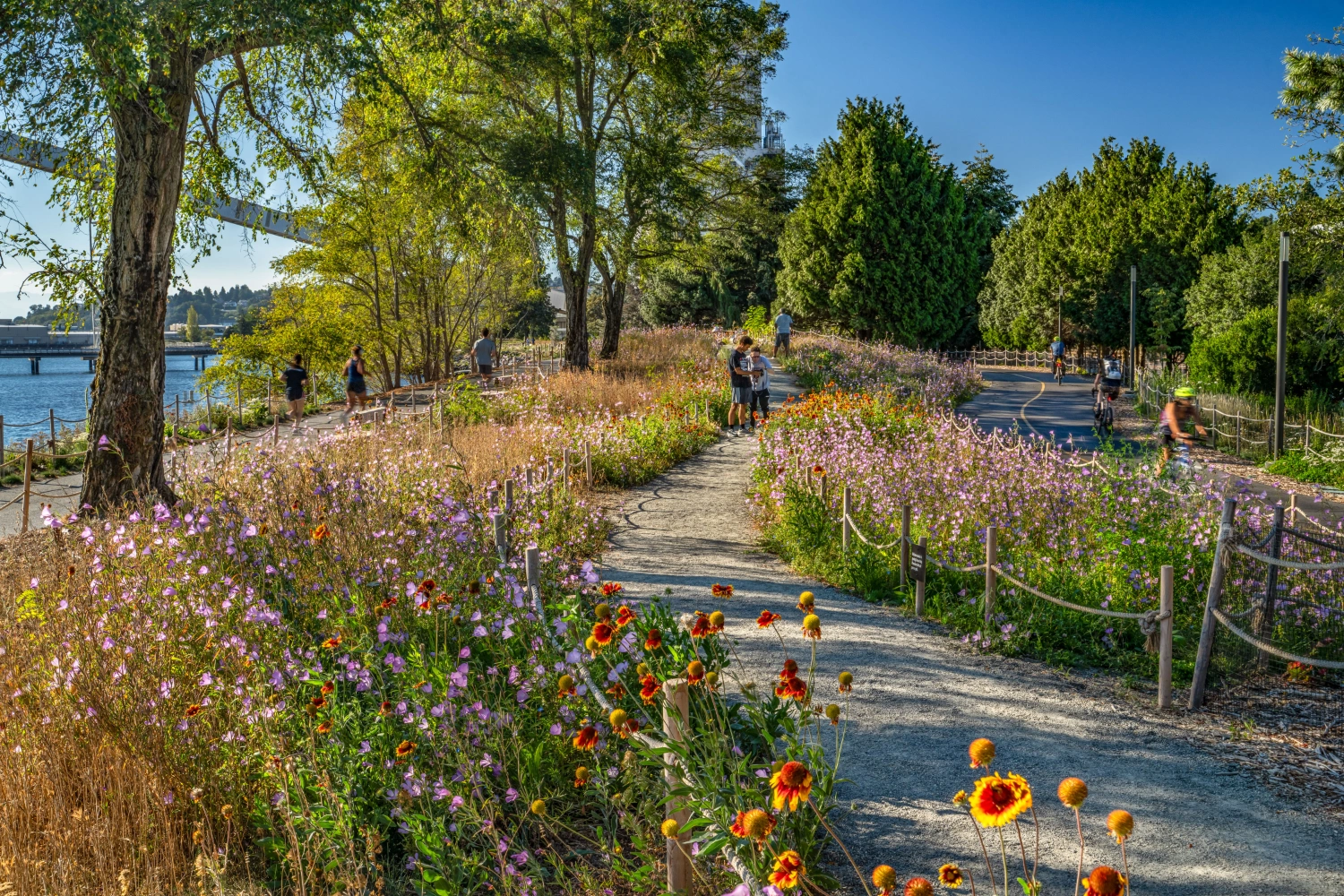
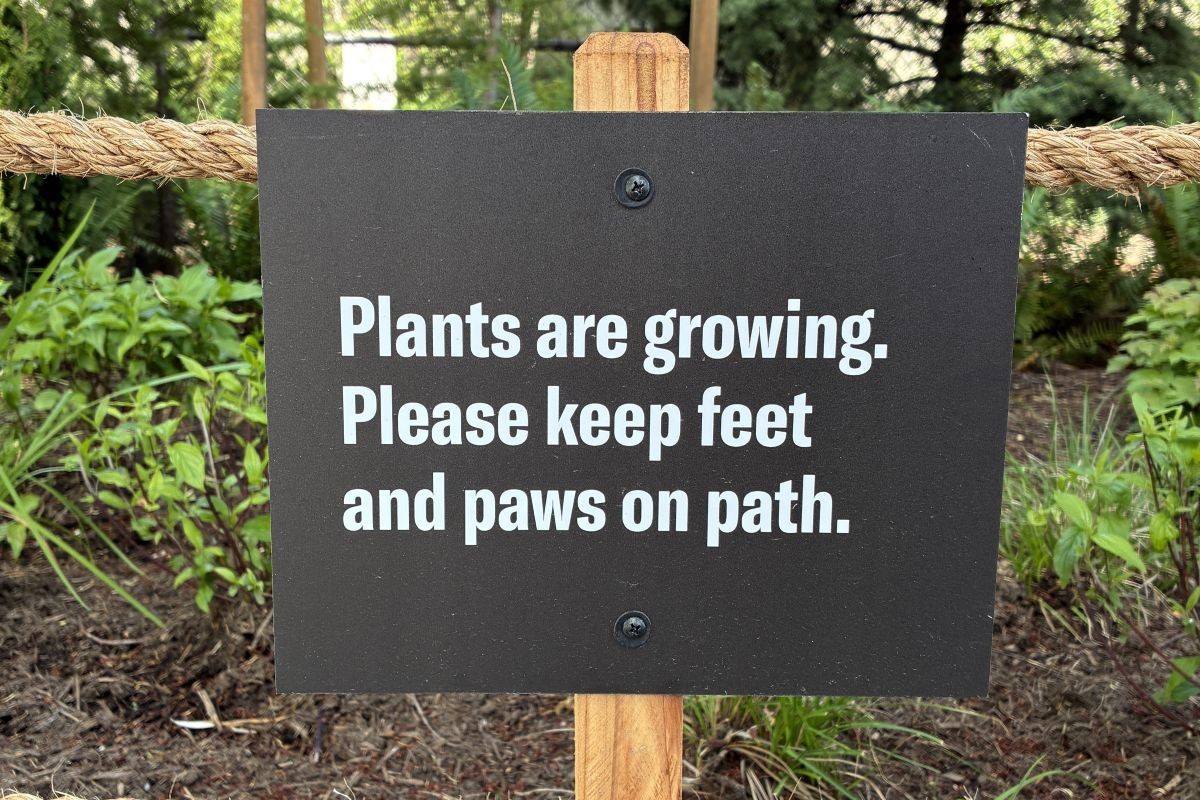
Many of these plants are native species and most of them are very young. They need time to grow and establish their roots. Rope and post fences have been installed around the landscape areas to protect these plants for several seasons.
Greenway and parks visitors (and bunnies) can help the plants by staying on the paths and not peeing or munching in the landscape areas.
Irrigation has been installed everywhere to provide adequate water. The landscapes will be well cared for by horticulturists and other staff during this important establishment period. Over time, as the plants all get larger and their roots grow deeper, the landscape teams will remove the fences.
Maintenance and Care
Park landscapes, like people, need extra care in their early years. This 3-5 year period of growth and adjustment, sometimes called “establishment,” is critical to the long-term health and vitality of new and restored landscapes. Trees and plants need care, water and extra tending as well as protection from feet, paws and wheels to put down roots and reach full height. Private funding covers care, maintenance, repairs, and cleaning in these public spaces for the first five years after opening.
DSA is the EBC implementation partner, leading a Seattle-based team with experience in public-private partnerships, public space management, and community engagement. Uplift Northwest supports daily park care, including litter pickup and graffiti removal. The City of Seattle, including Seattle Parks and Recreation and SDOT, and the Port of Seattle own these public spaces and will remain closely involved to help keep them safe, welcoming and well cared for.
During design, the EBC project team worked with national experts in public space maintenance and with City and the Port partners to ensure the new elements of the parks and greenway would be durable and maintainable to an agreed upon standard of care.
 Back to top